
Plant Systems grew together for another bountiful season, which wrapped up last week. We had quite a few seniors graduating this year, and they remind me of dandelions (as a beekeeper, I value them highly as an early-spring food source for my hives). The 2026 class is full of adaptable, robust “plants” — bright flowers that will disperse in the wind soon, no doubt, flowering productively in the near future wherever they land.
I didn’t study much ecology in college; I’m a biology gal who loves her plants. You could, though, make a solid case that all gardeners are de facto ecologists. Even with a single pot of petunias on your stoop, you would certainly notice a hummingbird showing up for nectar, a deer that browsed a few stems, a pill bug (more often called a roly-poly) hiding out under the shade of the leaves, or a snail making small, slimy trails and holes in your petals. Petunias are repellent to most critters because of their smell, meaning you’ll have no aphids and color all summer. They even withstand Fallon heat when watered well. Petunias, however, in the world of squirrels, are a much sought-after delicacy. While pinching your spent petunia flowers encourages more blooms, a squirrel “pruning” often means a return trip to the garden center.
A garden teaches us so many things: patience, science, resilience, and awareness of the world around us. If you don’t have a garden, I can’t accurately describe the zen-like meditation of roaming around your yard on a warm Saturday morning, coffee in hand, admiring all. Just last week, I saw my first future monarch caterpillar munching away on a showy milkweed plant. Scientists say that monarchs can smell milkweed — if you’ve never smelled them, the butterflies are right: milkweeds do smell great. Milkweed is also an important seral species.
In the restoration world, seral plants are plants that help build a community, usually in successive stages. Early seral plants called pioneers often establish quickly on disturbed sites. Apricot mallow is one such plant. Sometimes called a fire follower, it grows quickly after fires, floods, or grading. Like most plants native to our great state, it rapidly develops deep roots that help anchor it and the surrounding soil, keeping it from blowing away. Globemallow is drought tolerant and grows in such a way that it helps prevent aggressive weed grasses from taking over in the same area it is growing in. Globemallow also provides needed biomass to the area where it’s planted, which helps other plants colonize.
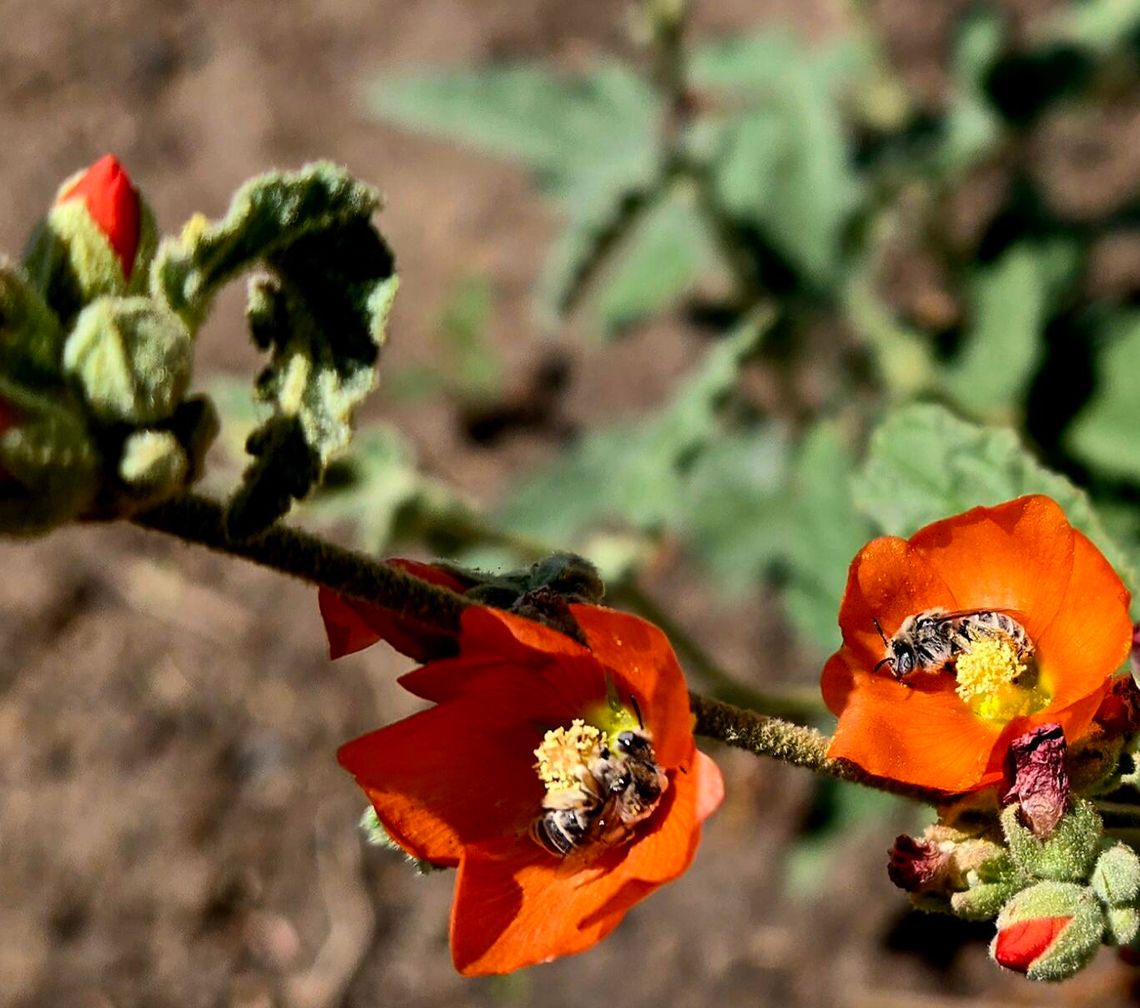
Additionally, globemallow is a pollinator magnet, providing a steady source of nectar and pollen for native bees, butterflies, moths, and honeybees. Inviting it to your yard will almost guarantee you will also be inviting the tiny globe mallow bees shown in the picture. These tiny gray bees are the sleepiest; you’ll often find them napping in the petals. Globemallow ecology is a bit of an analogy for my Plant Systems classes this year. They are a seral species, building a resilient community, putting down deep roots, and supporting others. Thank you for following along as we grew this year. We’ll be back in September.



















Comment
Comments