
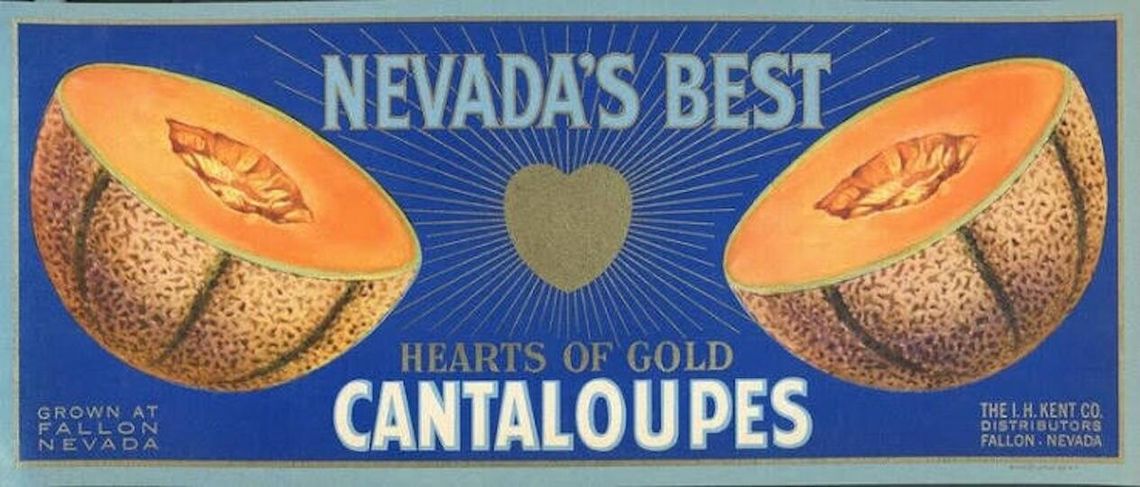
When Churchill County celebrates the Hearts of Gold cantaloupe each summer, the spotlight usually falls on the melon.
But one of the most important chapters in the story belongs to two immigrant families whose contributions helped preserve the crop through some of its most difficult years.
Juichi Kito and Kensuke Ito arrived in Fallon in 1920 after California laws restricted land ownership by Japanese immigrants and forced many farming families to seek opportunities elsewhere. Looking for an opportunity, the two families purchased an 80-acre ranch south of Fallon and began building a new life in the Lahontan Valley.
Two years later, the families planted Hearts of Gold cantaloupes.
The timing proved fortunate. Demand for the sweet melon was growing rapidly, and Fallon's combination of sandy soil, irrigation water, hot days, and cool nights produced exceptional fruit. The Kito-Ito Ranch soon became part of a booming local industry that helped make Churchill County known far beyond Nevada.
By the mid-1920s, Japanese farming families were raising approximately 100 acres of Hearts of Gold cantaloupes in the Fallon area. The melons were shipped across the country, reaching markets as far away as South Carolina. Local historians credit the Kito and Ito families as major contributors to the crop's popularity and success.
While they were not the first farmers to grow Hearts of Gold in Churchill County, historical records indicate that they became among the crop's strongest advocates.
The success did not come easily.
The families faced discrimination from the moment they arrived in Fallon. Their purchase of farmland sparked controversy at a time when anti-Japanese sentiment was growing throughout the West. Yet they remained, working the land and raising their families while building one of the valley's best-known agricultural operations.
As the cantaloupe industry expanded during the 1920s, the Kito-Ito Ranch became known for more than melons. The families raised vegetables, livestock, poultry, and dairy products while continuing to make Hearts of Gold their primary cash crop.
By the late 1930s, drought, economic hardship, and competition from newer melon varieties devastated the Hearts of Gold market. Many growers abandoned cantaloupes and shifted to alfalfa production. What had once been one of Churchill County's signature crops nearly disappeared.
The Kito and Ito families did not walk away.
Photographs preserved by the Churchill County Museum show workers tending cantaloupe fields at the Kito-Ito Ranch in 1941, years after the industry's collapse had begun. While production declined, the families continued growing the melons that had become one of the valley's signature crops.
The ranch also became home to a remarkable family story. Between them, the two families raised 14 children in a three-bedroom farmhouse on St. Clair Road. Education was emphasized, and every child graduated from high school. Many later pursued higher education and professional careers.
The old ranch house still stands today, a reminder of the families whose work helped shape Churchill County agriculture.
More than a century after the Kito and Ito families arrived in Fallon, the Hearts of Gold cantaloupe remains a symbol of the community. The melon's story often begins with seeds brought from Michigan and the farmers who first planted them in Nevada.
But its continued place in Churchill County history owes much to families who believed in the crop and continued cultivating it through difficult years.
In many ways, the story of the Hearts of Gold is also the story of the Kito and Ito families — pioneers whose roots in Churchill County ran as deep as the fields they cultivated.
HEARTS OF GOLD: A TIMELINE
1890s
Plant breeder Roland Morrill develops the Hearts of Gold cantaloupe in Benton Harbor, Michigan, by crossing the Osage and Netted Gem varieties.
1911
Fallon farmer O.J. Vannoy introduces Hearts of Gold cantaloupes to the Lahontan Valley, where the climate and soil prove ideal for growing the melon.
1920
Japanese immigrants Juichi Kito and Kensuke Ito arrive in Fallon and purchase farmland south of town.
1922
The Kito and Ito families begin growing Hearts of Gold cantaloupes.
1925
Japanese farming families cultivate approximately 100 acres of Hearts of Gold cantaloupes in the Fallon area. The melons are shipped to markets across the United States.
1920s-1930s
Hearts of Gold becomes one of Churchill County's signature crops. Local histories report the cantaloupes were served at the White House during this period.
1930s
The Great Depression, drought, and changing agricultural markets cause a sharp decline in cantaloupe production throughout the Lahontan Valley.
1941
Photographs document continued cantaloupe production at the Kito-Ito Ranch, years after many growers had abandoned the crop.
1940s-1970s
The Hearts of Gold survives through the efforts of local farming families who continue preserving the variety despite declining commercial production.
1985
The first Fallon Cantaloupe Festival is held, celebrating the region's agricultural heritage.
Today
The Hearts of Gold remains one of Churchill County's most recognized agricultural products and the centerpiece of the annual Fallon Cantaloupe Festival.















Comment
Comments