 Kelli Kelly
I recently learned that my friend Sabina hates beans.
Not black beans. Not pinto beans. Not kidney beans. Beans as a category. All Beans.
This came as a surprise because I had previously given her a bag of beans as a gift. The more surprising part is that she never told me. She accepted the gift graciously, thanked me, and carried on with her life. It wasn't until this week, when her husband Jordan casually revealed this information during a conversation, that I learned the truth.
I immediately had questions. How can someone hate all beans? More importantly, how long has this information been concealed?
Fortunately, lentils remain acceptable. Apparently there is a distinction between beans and lentils that is deeply meaningful to some people. As someone who routinely gives away agricultural products as gifts, I am willing to respect that distinction even if I don't fully understand it.
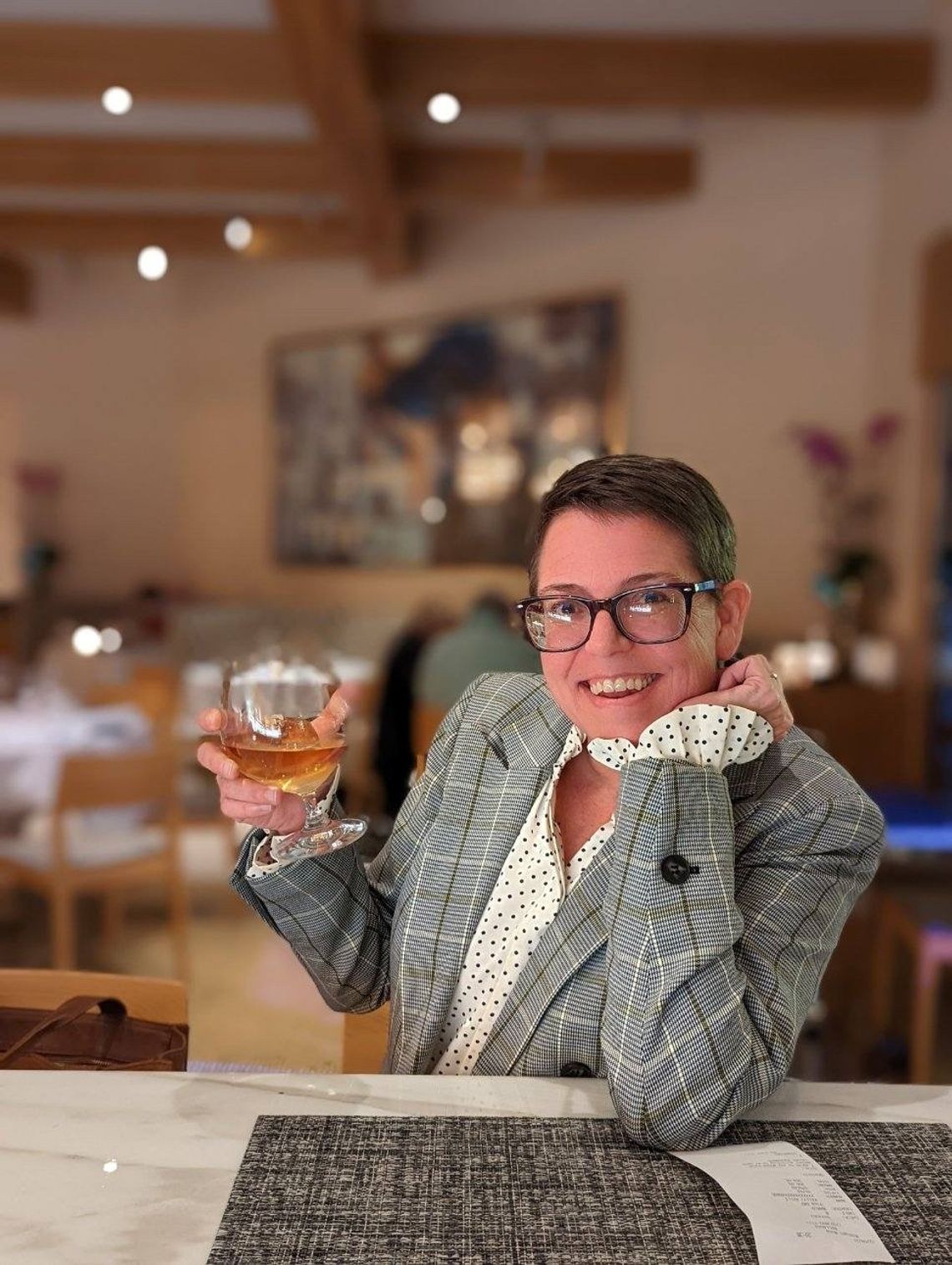
The conversation took place at the American Legion in Fallon. I had invited a group of colleagues from around Nevada to gather there after a work event. Most of them work on projects through University of Nevada, Reno Extension. While I am technically an external collaborator, I have worked alongside many of these folks long enough that they have become friends.
Whenever people visit Fallon, I find myself slipping into the role of unofficial ambassador. I want visitors to see the Fallon I know. Not just the town they drive through or the community represented by a few statistics and headlines, but the places where people gather and relationships are built. Every town has those places. They are often easy to overlook if you don't know the community well, but they are where much of the real work of community happens.
The American Legion is one of those places for me. It is a place where veterans gather, where organizations hold meetings, where community dinners take place, where stories are shared, and where people show up for one another. Over the years, I have spent enough time there that it feels less like a building and more like part of the fabric of the community itself.
As the evening went on, conversations wandered the way good conversations often do. People met one another, exchanged stories, and found unexpected connections. At one point Jordan observed that my husband Neil reminded him of Ron Swanson from "Parks and Recreation."
This sparked a discussion about the show, its characters, and which of us might be most accurately represented by the citizens of Pawnee. One conclusion was immediately obvious to everyone involved. I am Leslie Knope.
Not because I work in the local government. Not because I maintain binders for every conceivable situation, although there is probably enough evidence to support that claim. Rather, I identify with Leslie because of her deep affection for her community and her motivation to have a positive impact, to make a difference.
One of the things I always appreciated about that character was that she never pretended Pawnee was perfect. She knew every flaw, every frustration, every eccentric tradition, and every reason an outsider might question the town's collective judgment. Yet she loved it anyway. In many ways, her affection was stronger because it was informed by familiarity rather than idealism.
That resonates with me. Anyone who has lived in a place long enough understands its shortcomings. Loving a community does not require pretending it is flawless. In fact, I think the opposite is true. Real affection comes from knowing a place well enough to see both its strengths and its weaknesses and choosing to invest your time, energy, and attention there anyway.
Near the end of the evening, Sabina said something that has stayed with me all week. After watching me introduce people, share stories about Fallon, talk about local organizations, and proudly show off one of my favorite places in town, she told me that a lot of things about me suddenly made more sense. She had seen me in one of my places.
I knew exactly what she meant. The places we choose to spend our time reveal something about us. They tell people what we value. They demonstrate what we are willing to support, protect, and invest in. Sometimes they explain parts of our story more effectively than a biography ever could.
For me, the Legion is one of those places. It is not the only one, but it is an important one. It represents service, community, relationships, and a belief that people are stronger when they gather together. Standing there that evening, introducing friends from different parts of my life to one another, I suppose I was revealing more about myself than I realized.
Sabina may never like beans. That is a reality I am still processing. But after an evening at the Legion, surrounded by friends, stories, and community, she at least understands why I keep giving them away.



Comment
Comments