
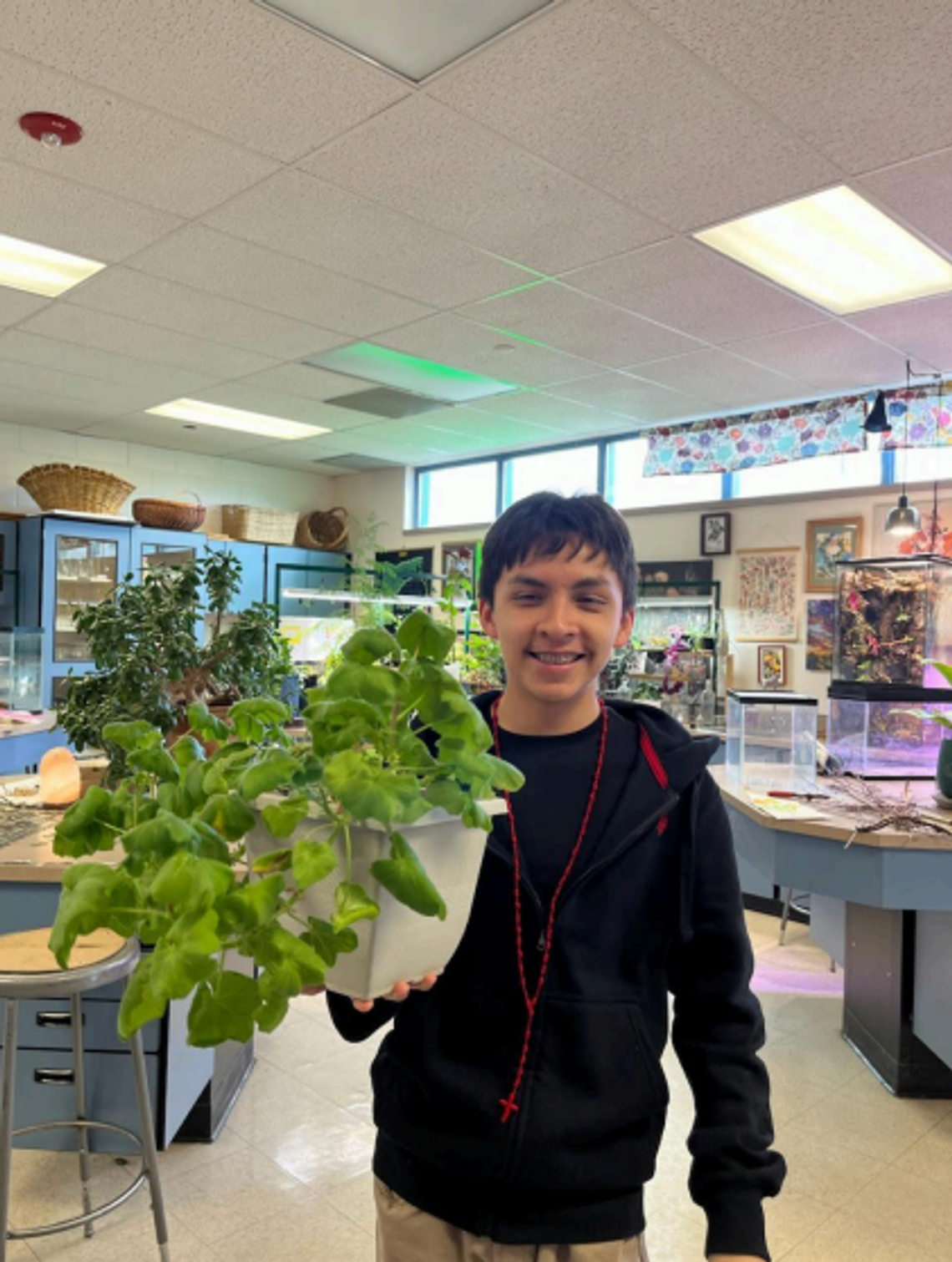
In the Plant Systems program, students cultivate a variety of plants and often brew tea from their harvests. This hands-on approach provides an opportunity to connect with the plants, deepening understanding of their growth and uses.
Second-year Plant Systems students focus heavily on ethnobotany, the scientific study of how people interact with plants. Ethnobotany explores how different cultures use, manage, and view local flora, including flowers, herbs, and other plant species.
Drinking teas and tisanes, or herbal infusions, is a key part of the curriculum. Through these practices, students explore concepts in geography, anthropology, and botany, gaining a broader perspective on the significance of plants in various societies.
My name is Orlando Ugalde Santana. I recently completed an ethnobotany project in Mrs. Sammons' class that I would like to share: Palo Azul.
As a member of our school's International Club, I found this project especially interesting. Palo Azul (Eysenhardtia polystachya) is a traditional medicinal herb grown and used in Mexico and the Southwestern United States.
Palo Azul is commonly called “kidney wood” or “blue stick” if you’re translating from Spanish. Hardy to USDA Zone 7, areas with minimum winter temperatures of zero to10 degrees Fahrenheit, this small tree is prized for its bark, which can be used to make a tea that helps with many health issues.
Consult your doctor before use, but according to the University of Texas at El Paso, Palo Azul may offer relief for kidney and urinary health, inflammation, and digestive issues.
After boiling the bark for about 45 minutes, you should put it in a glass teacup if you have one and place it in the sun. It will be like blue magic is inside your tea. Palo Azul has a very fascinating chemical that allows it to fluoresce, which happens when specific natural compounds in the plant’s wood react with water and light.
Mexico has been using this “blue stick” traditionally since the 15th or 16th century. Aside from its various health uses, it is also used in cultural rituals to heal and cure people.
Curanderos are people who can heal your physical, mental, and spiritual illnesses by focusing on holistic wellness, which means that the mind, body, and spirit are inseparable. Cleansings are not for everyone. But for you people of faith, we have long used these cleansings.
Palo Azul has been used for generations as a traditional herbal drink, but experts say more scientific research is needed to fully understand its benefits and potential health effects. Perhaps it will be the breakthrough cure we need. There is so much for all of us to learn about plants.
Whether it's spiritually, health-wise, or just a cup of tea, Palo Azul continues to be a small but meaningful part of cultural and herbal practices.
“Aunque el Palo Azul puede parecer solo una planta, para muchos representa cultura, historia y esperanza. Y mientras pasan los años, sigue recordándonos que algunas plantas nunca pierden su valor.”
English Translation: “Although Palo Azul may seem like just a plant, for many, it represents culture, history, and hope. And as the years pass, it continues to remind us that some plants never lose their value.”
Do you have a teenager in your life? If you do, you might know “the tea” is our slang for sharing the truth (or gossip).




















Comment
Comments