
 Leanna Lehman
The room at Fallon’s Old Post Office was quiet at first.
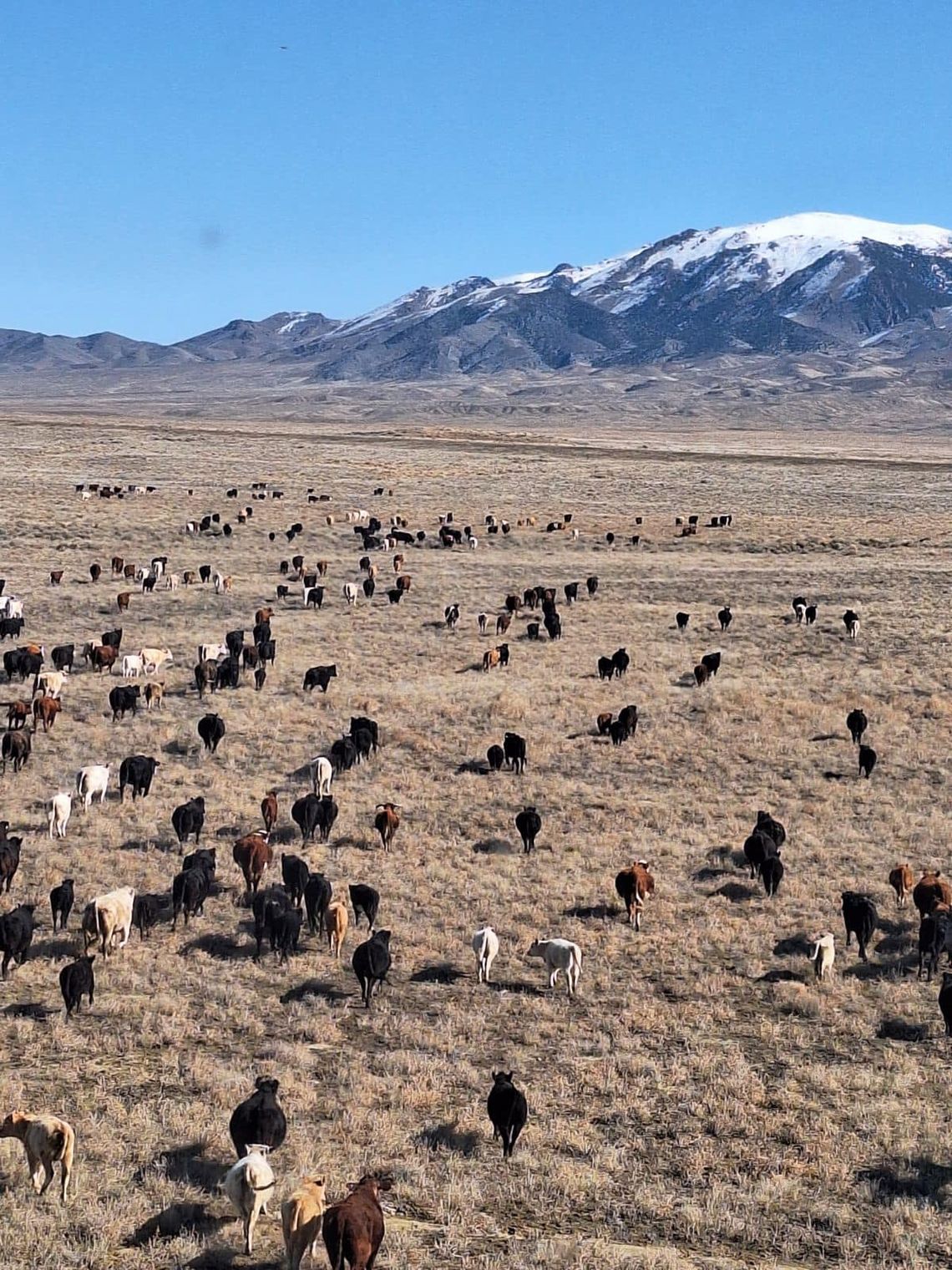
Around the tables sat ranchers who have spent years grazing cattle across northern Nevada rangeland — land that will soon be divided by the fence line of the expanded Fallon Range Training Complex.
On Feb. 11, officials from Naval Air Station Fallon and Naval Facilities Engineering Systems Command Southwest met with representatives from the Bureau of Land Management and ranchers affected by the expansion.
The purpose of the meeting was to address ongoing compensation negotiations tied to the withdrawal of land for the B-16, B-17 and B-20 ranges, and to inform ranchers that the two-year permitting process timeline had begun. At the end of that period, the land will no longer be open for grazing and new grazing permits will be needed for accessing BLM land outside the restricted areas.
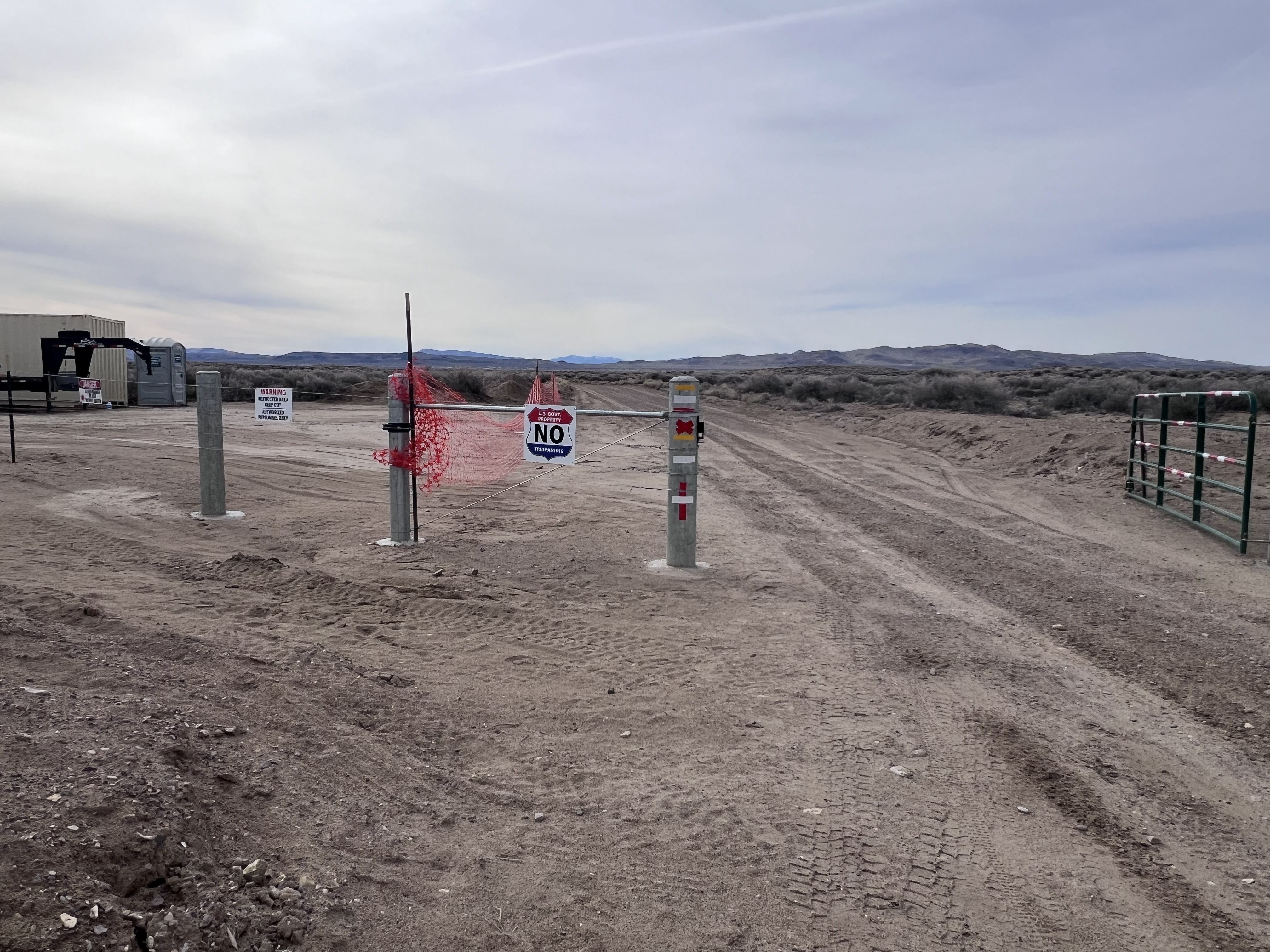
According to NASF Commanding Officer Mike Haymon, the land withdrawal is now complete, and the ranges will eventually be fenced. NAS Fallon Community Plans Liaison Officer (CPLO), Robin Schofield, later explained that despite the withdrawal, access is not yet restricted.
The B-17 range, located east of Fallon, and the B-20 range, which covers part of the Carson Sink area, remain accessible to ranchers for livestock grazing and public use. The B-16 range, which is accessed from Sand Canyon Road, is also still open even though construction on the perimeter fence has begun. "As long as the gates are open, the land is still accessible," said Schofield. Pictured right: B-20 range entrance. Photo by Leanna Lehman.
For the ranchers in the room, the pending loss of access was already understood. The bigger question is what comes next.
The Fallon Range Training Complex expansion, authorized by Congress in the 2022 National Defense Authorization Act, transferred roughly 489,000 acres of federal land to Navy control. Thirteen grazing allotments were affected and include Churchill, Mineral, and Pershing Counties.
An Environmental Impact Statement estimated permanent economic losses to Churchill County ranching operations between $490 million and $683 million over time. The report also stated that while individual ranches would see significant impacts, the broader county economy would not.
Jack Payne, owner of Clan Alpine Ranch near the B-17 range, said the Navy’s projected 100-year loss calculations don’t match the realities of how ranches operate or how they are financed.
“Our bank doesn’t want paid off in 100 years,” Payne said. “Our bank wants paid off now. I got my loan through SBA and bought the ranch. You’re going to take a big chunk of it and put me out of business. I’m just going to tell my bank, ‘Hey, I guess I invested this money. I’ll pay you in 100 years.’ I mean, this is ridiculous.”
The Navy has structured compensation discussions around projected long-term grazing losses. Improvements such as wells, pipelines, corrals, and fencing may be compensated separately if privately owned. In areas where private land has been acquired, federal appraisal standards apply.
But Payne questioned whether anyone can realistically quantify a century of loss in an industry that runs on weather, markets, and generational succession.
Justin Snow, another rancher affected by the withdrawal, said his earlier compensation based on projected losses was minimal. He also said he did not sign newly issued BLM grazing permits for the redefined allotments because he felt the language could be interpreted as acceptance of the Navy’s compensation offer.
“I felt trapped,” Snow said.
Several ranchers echoed that concern, asking whether signing a new BLM permit, which reflects reduced Animal Unit Months under the revised allotments, would signify acceptance of the proposed compensation terms.
Haymon explained the two processes are separate. “We’ve made it very clear that the signature of a permit is completely and totally independent and is not an acceptance of the offer.”
It was agreed that the permit language would be modified to explicitly state that signing does not affect compensation agreements. Payne and other ranchers indicated that clarification would make them more comfortable moving forward.
Even with that adjustment, frustration remained.
To complete valuations, the Navy has contracted a Reno-based consultant and is requesting extensive financial documentation from each operation — tax returns, payroll records, asset lists, loan information, and grazing records. Snow said he declined to provide the full list out of concern for how his private financial information could be used.
The Navy indicated that incomplete documentation could affect the determination of valuations.
Ranchers also questioned the lack of replacement grazing. Payne said he spent years looking for alternative allotments and was told none were available.
“We spent three or four years in this deal looking for a replacement,” Payne said. “The BLM said there were no vacant allotments.”
Without replacement ground, the losses cannot simply be absorbed elsewhere. Operations that span hundreds of thousands of acres rely on coordinated grazing patterns, water infrastructure, and long-standing permitting structures.
“There’s nobody in here who doesn’t support the Navy,” said rancher Chuck Kendricks. “But it’s getting down to almost ridiculousness.”
Haymon acknowledged the strain and said lessons had been learned from earlier land transfers.
“This is a unique situation,” Haymon said. “We want to work with each one of you to make sure this process is specified to your circumstances. We really need your help to determine what the value is.”
Still, for ranchers like Payne, the concern is that access has been lost while negotiations continue.
“The rancher has the right to run cattle there,” Payne said. “You’re just rolling on and leaving us behind. We’re going to get into a court of law five years down the road, and a judge is going to say, ‘Well, you agreed to this.’”












Comment
Comments