
The only thing you can predict about late spring and early summer weather in the Lahontan Valley is that it will be totally unpredictable. If you already have tomatoes and other warm-season crops in the ground, have your frost cloth ready and water well in the days before temperatures dip into the low 30s at night. Well-hydrated plants are better able to withstand the cold, and moist soil can act as a bit of an insulator. Sometimes, small measures can get you a degree or two that can make all the difference. Hopefully, we won’t see these temperatures again ’til October.
Mentioning tomatoes and peppers reminds me that we’re sure grateful to report our third annual greenhouse sale fundraiser on May 9 saw many community friends carrying boxes of plants out our doors. The turnout was “tree’mendous,” and it made students immensely proud to see their plants find good homes. Thank you to everyone who supported us; we are beyond appreciative.
Contrary to the chilly weather we have had this week, last Wednesday was hot and darn windy. Advanced Plants class had an excursion to legendary Lattin Farms that day, and I was worried I might have to reschedule the trip they had been looking forward to and planning for quite some time. By the time fourth block rolled around, I had completely prepared a “don’t worry, we can reschedule” speech, but much to my surprise, they all voted to press on.
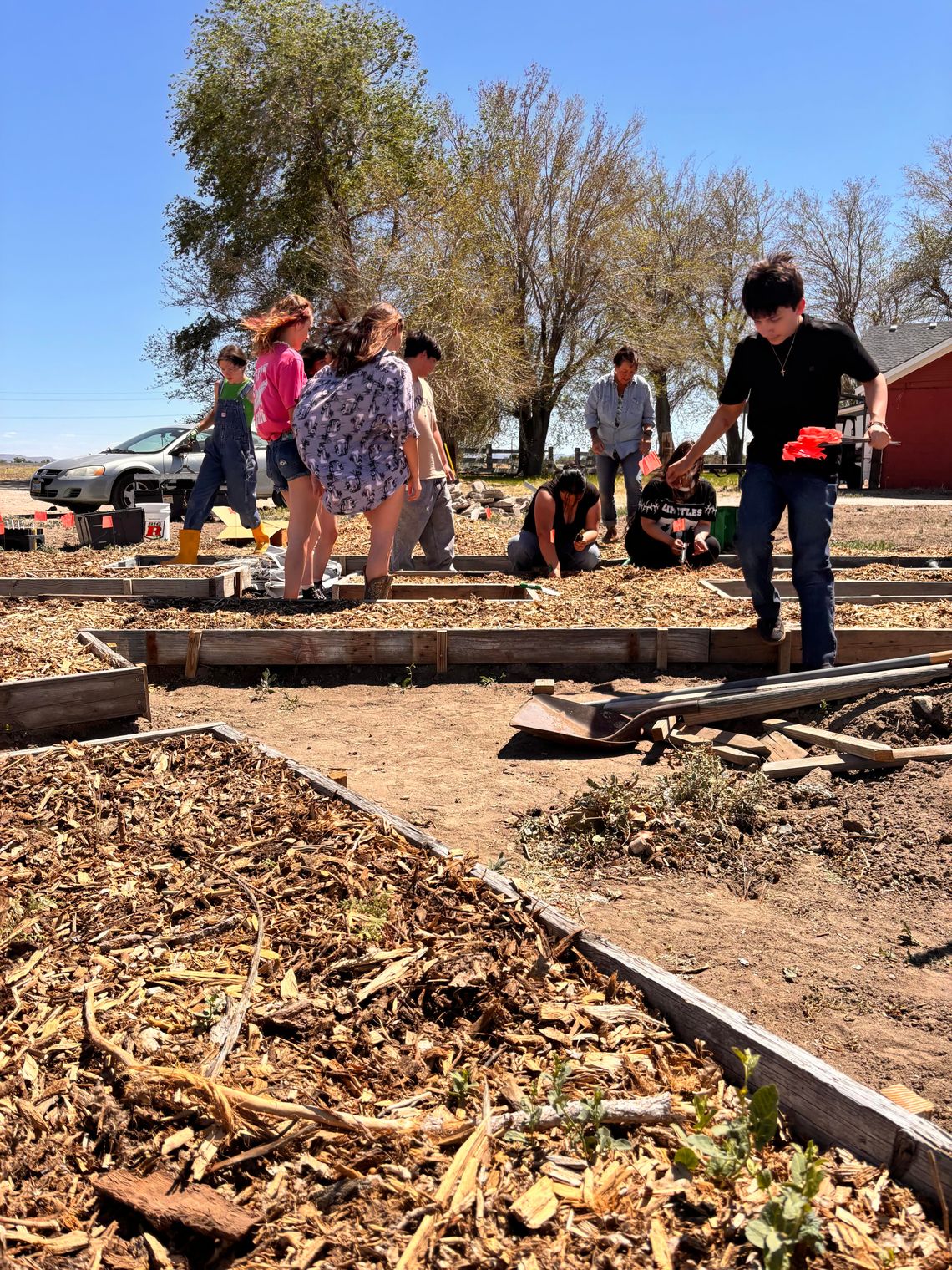
They eagerly headed out to the plot that Kalea Lattin had been working on. Kalea, no surprise, has plants and agriculture intertwined in her DNA. She has crafted a new, beautiful pollinator garden on her family farm. The garden is raised beds made of recycled materials shaped like Nevada and is just a stone’s throw behind the farm stand that I really should just set up a direct deposit with. There is no better place in the entire world, I’m certain, to buy melons. Midsummer, I leave weekly with boxes of watermelons (never pass up a Yellow Doll), honeydew, and cantaloupe, of course.
The pollinator garden features plants native to Nevada, now including some that Plant Systems grew, like yarrow, apricot globemallow, and currants. Kalea even thoughtfully placed species in the Nevada-shaped beds according to where they naturally thrive in our state. Students happily helped plant for about an hour before being treated to world-famous homemade muffins. There wasn’t a crumb left. Walking out to the parking lot, they were sweaty and tired, but I heard a lot of “best day ever” comments and one “I’ve never done anything like this; I love it.”
If you are considering a family garden, let this be a sign to go for it. The benefits are endless, and you get tomatoes!
Plant Systems is headed to the Stillwater National Wildlife Refuge this week for another planting trip. Stay tuned for updates. Follow Kalea and her pollinator progress on Instagram at @lattin_farms_pollinator_garden.











Comment
Comments