
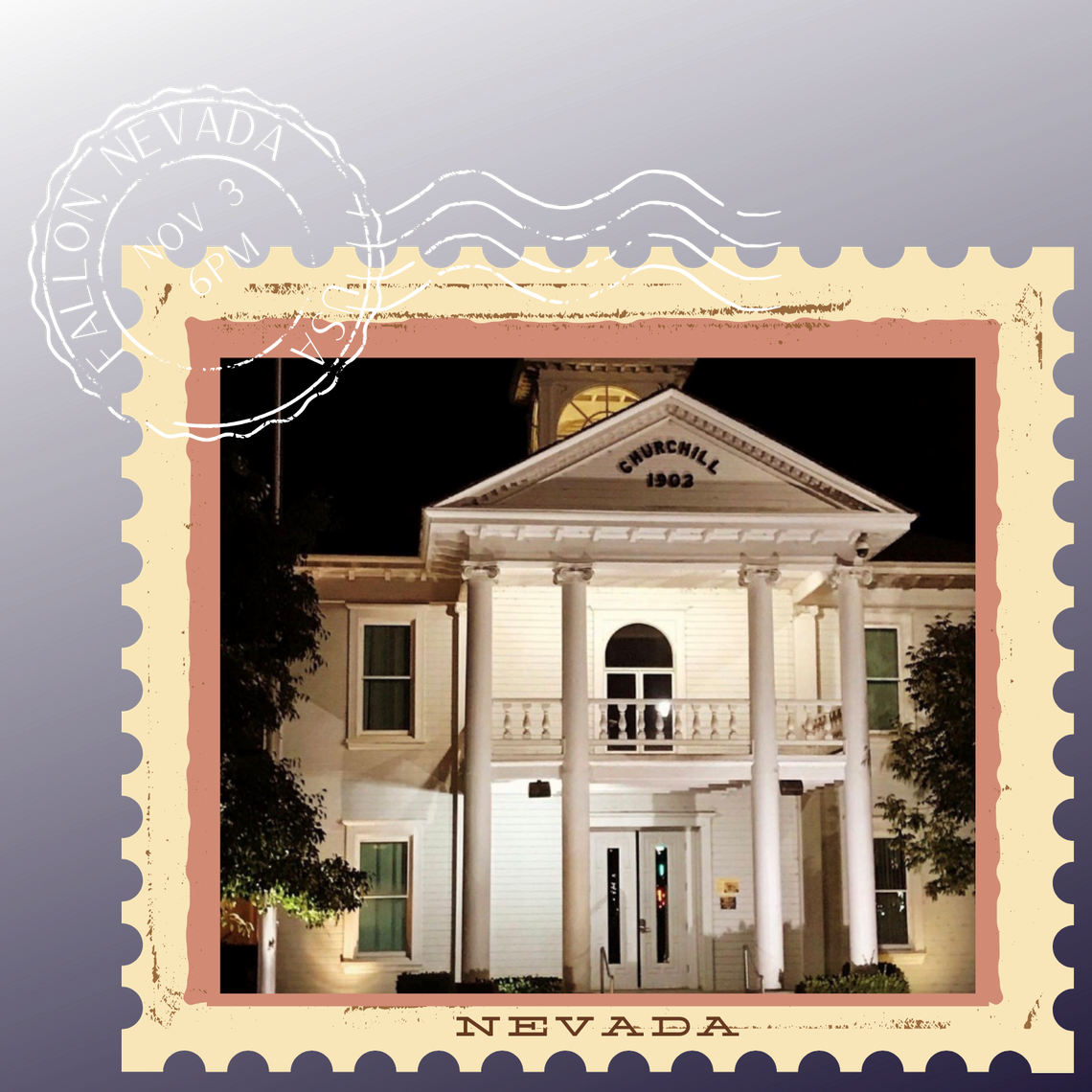
I enjoy thinking about our local history in terms of years and eras. What captured the hearts and minds of our local community 50, 75 or 100 years ago? With that question in mind, I turned to the “Fallon Standard” newspapers of 1951—75 years ago.
Reading the first edition of the new year, dated January 3, 1951, I found that both our hearts and minds were focused on Korea, where things were not going well for the United States.
On June 25, 1950, the North Korean People’s Army launched an invasion of South Korea across the 38th parallel, a dividing line between North Korea and South Korea established by the United Nations Security Council because of ongoing hostilities between the north and the south. The North Korean forces captured Seoul. President Truman asked the United Nations and the United States to act to end the conflict.
Between November 27 and December 13, a battle took place close to the Chosin (Changjin) Reservoir in present-day North Korea. It was a rout for the United States. The People’s Republic of China sent a force of 120,000 troops to engage the United States and UN troops, overwhelming them and managing to surround our forces. “In the ensuing 17-day battle in freezing weather that followed, the UN forces were able to break out of the encirclement and withdraw to the port of Hungnam in what U.S. historians described as the ‘greatest evacuation movement by sea in U.S. military history’” (Wikipedia, “Korean War”). History still calls the survivors of that battle the “Chosin Few.”
The January 3 “Standard” brought news of Chosin to Fallon in a very personal way: “Mrs. Byron Miller has received word from 1st Lt. Miller who had gotten to a transport off Hungnam after the 17th regiment combat team had gotten through from Hyesanjin on the Yalu. Lt. Miller was a member of the demolition team that followed the RCT out and blew up everything that couldn’t be moved.” The newspaper quoted a letter written by Lt. Miller to his mother: “They refer to this deal here as another Dunkirk. I don’t know as I wasn’t present at the other one, but one thing I do know is---anything but being killed is better than this. …Once you get wet you are a sheet of ice. They come aboard frozen and so cold they can’t even talk. Many of the troops have suffered loss of arms and legs due to freezing without proper aid in time. …Rumor has from the States we made an orderly withdrawal—tell them for me and a few thousand others we got the HELL knocked out of us with probably more to come if we don’t get help.”
Another touching and horrifying account of the battle came from a January 3 “Standard” report that “Pfc Donald Mooney, son of Mr. and Mrs. Frederick Mooney of Hawthorne…was the only one of his group left after the siege of the Chosin Reservoir in Korea.” That made him one of the “Chosin Few.”
With the draft in place, the “Standard” began to run a column titled “Our Boys in Military Service.” By May 1951, the list had grown to over one hundred names.
It seems that the war was on everyone’s mind. In a weekly news column about the events at Churchill County High School, the “Standard” informed readers that “To prepare themselves for college entrance, Miss Jenny Johnson’s English 111 classes are doing research papers on various subjects.” Among the subjects were “The Geography of Korea,” “The Atom Bomb,” and “Whether or not the atom bomb should be used in Korea.”
Please send your stories and ideas for stories to [email protected].











Comment
Comments