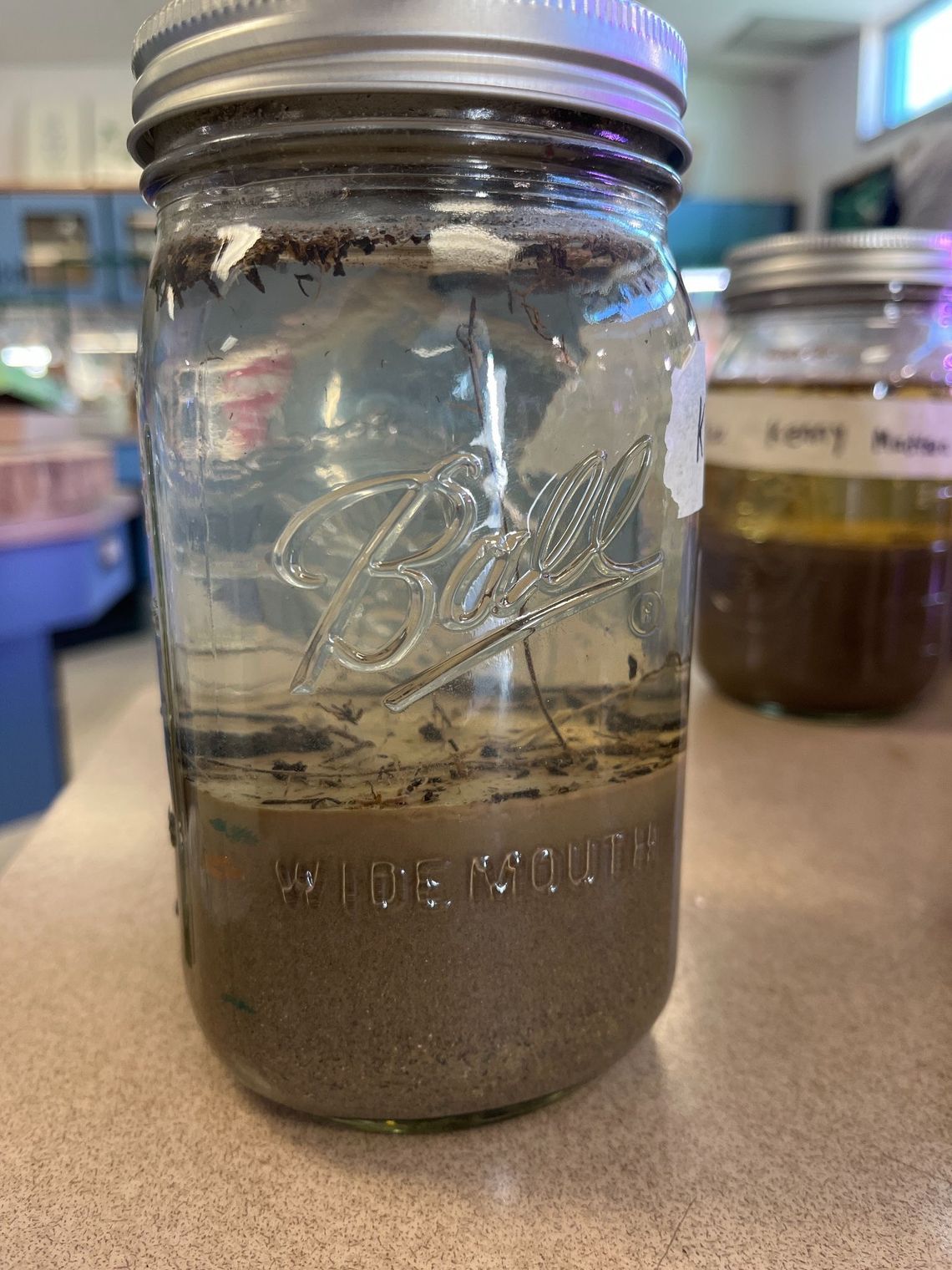
My name is Colbie Kelle. I am a freshman in Plant Systems II, and our current studies find us underground. We are studying soil, especially the healthy kind. Healthy soil is very important to my family and me. Our family business, Dandelion Express flower shop, relies on healthy soils all around to produce the flowers and houseplants we design. Having healthy soil in and out of the shop has made many people happy in our town. We send flowers and plants for so many occasions like birthdays, funerals, I'm sorries, weddings, and so much more.
Healthy soil is essentially the opposite of dirt. Botanists don't like the term “dirt” when talking about soil because soil is alive. By some estimates, if you grabbed a handful of healthy soil, you would have more living organisms in your hand than you could find in the entire world. Healthy soil is packed with living organisms, such as bacteria, fungi, and small animals like worms, ants, millipedes, and beetles. It is also normally moist and spongy. Dirt, I would say, is normally dry, crumbly, and has little life.
Healthy soil is ideally 45% mineral parts, 25% air, and 25% water. The remaining 5% is microorganisms, roots, and humus. Humus is very good for making healthy soil. It is a dark organic component of soil formed by the partial decomposition of plant and animal matter, such as leaves, twigs, and aged manure.
You may be wondering, why aged manure? If you add fresh manure as fertilizer or organic matter, it could burn plants due to the high nitrogen content in unaged manure. So instead, if you are going to use manure, I recommend it sit and age for 3 to 5 years. Actively turning it, adding leaves, twigs, and grass clippings, and lightly adding some water can speed up the process by quite a bit.
Your goal soil is loam. Loam is made up of 40% sand, 40% silt, and 20% clay. Fallon has a lot of sand. This can make it challenging to grow some plants in our area. Our weather can also make it tough to grow some plants.
Another important factor to consider is pH. Some plants need a type of healthy soil with more acid in it, or maybe less. For example, hydrangeas (a type of flower) tend to prefer more acidic soil, while spinach needs less acidic soil. Changing your soil pH can be difficult. One solution is nurturing your soil. Healthy soil acts as a living, breathing ecosystem that filters water, cycles nutrients, and supports plant growth.
Don’t forget to protect your investment; don’t forget to mulch. To keep the soil moist and the temperature regulated, you should use a mulching technique, which involves applying 2 to 3 inches of wood chips, leaves, or straw. Mulch also helps keep your soil in place and prevents it from blowing away in the wind or washing away with erosion.
Did you know many common antibiotics, like streptomycin and tetracycline, are actually sourced from soil organisms? Healthy soil is the foundation of life, providing essential nutrients, sequestering carbon, and fostering biodiversity for a sustainable future.
Don’t’ Forget!
The Greenwave Garden, in partnership with the Lahontan Conservation District, will host a fundraiser on May 9 from 9 a.m. to noon at Churchill County High School. Student‑grown trees, vegetables, succulents, herbs, native plants, flowers, and more will be available. Proceeds directly support the Plant Systems program.


















Comment
Comments