
 Leanna Lehman
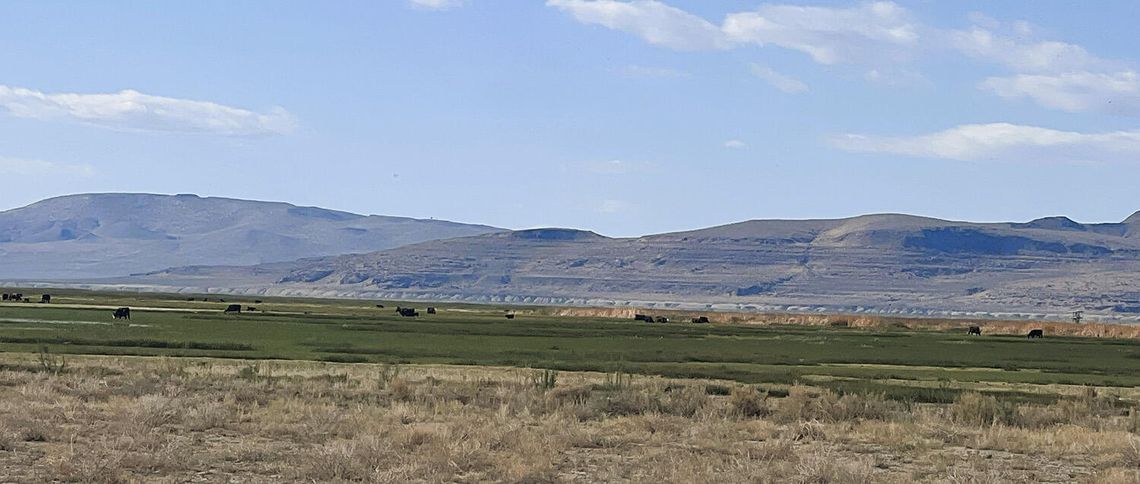
A change in Nevada Revised Statutes and the Nevada Department of Wildlife’s “comparable pricing” means a drastic change in grazing fees at Carson Lake Pasture in Churchill County. Costs to climb to nearly double what they were a year ago – just as fuel prices skyrocket, taxes increase, and available grazing land in the region diminishes.
One rancher recently said the increase was not expected and described it as something that “just happened,” despite earlier discussions suggesting rates would remain unchanged. They also questioned both the timing and justification, calling the pasture “very run-down” with “no fence maintenance” and asking, “Where does that money go?”
The pasture, located within a Nevada Department of Wildlife (NDOW) wildlife management area, is leased by the Truckee-Carson Irrigation District (TCID), which in turn issues grazing agreements to local ranchers.
Under the proposal, NDOW would raise the base rate to $25 per AUM, replacing a long-standing state minimum rate of about $13. Ranchers also pay an additional district fee through TCID, currently about $5 per head, bringing the combined cost to just over $30 per AUM, or animal unit month, which is the amount of forage needed to sustain one cow and calf for one month.
For some operators, that increase translates into tens of thousands of dollars in additional seasonal costs.
One local rancher said that, with approximately 400 head grazing for a seven-month period, costs could approach $84,000 for the season, with an additional $8,000 for vaccine expenses. Further, they noted that the ranchers who graze cattle on the Carson Lake Pasture are long-time Churchill County residents, taxpayers, and employers, and that nearly $90,000 leaves the county.
At the April 8 TCID meeting, directors discussed the increase, which stems from the repealed Nevada statute that set the state minimum grazing rate. This means that the minimum no longer applies. As a result, fee-setting reverted to Public Law 101-618, which directs that grazing rates be based on comparable pastures.
“We ran an analysis … on comparable pasture rates,” said Kyle Larson, Carson Lake supervisor with the Nevada Department of Wildlife. He noted that rates ranged from about $20 to more than $30 per AUM, with $25 selected as an average.
“We understand that that’s an increase, almost double over what’s been charged in the past,” he added.
But participants in the meeting questioned whether those comparisons reflect the reality at Carson Lake.
One participant asked, “When you compare pastures… everybody else got saltgrass?” pointing to differences in forage quality and irrigation.
Larson said that $25 per AUM is on the lower end of grazing fees. “When you look at what people are charging for irrigated pastureland… It's actually a lot higher. We leveled that down to try to account for some of that saltgrass that exists out there.”
Others raised concerns about raising rates while the pasture remains under evaluation.
The proposed lease term has also been reduced from five years to two, allowing the state to revisit conditions once a forage study is complete.
Operational challenges at the pasture continue to surface, as reported by committee members and ranchers.
Approved minutes from the Jan. 26 meeting document the loss of 19 cattle to anaplasmosis – a tick or insect-borne disease in cattle that destroys red blood cells, leading to weakness, weight loss, and often death in severe cases. Also, there were reports of missing calves and ongoing concerns with fencing and water distribution. February discussions added to that list, with participants pointing to poor water movement and uneven pasture conditions.
A participant said during the meeting, “Water just went to pastures, didn’t get moved all summer… some of it just flooded and didn’t get moved to dry spots.”
For ranchers, the concern is not just the increase, but whether the pasture in its current condition justifies it.
The issue also comes at a time when access to grazing land is tightening in parts of the region, including areas impacted by the Fallon Range Training Complex expansion, increasing reliance on remaining pasture.
The TCID Board of Directors approved the grazing fee increase during their March 10 meeting.




Comment
Comments