
 Allison Diegel
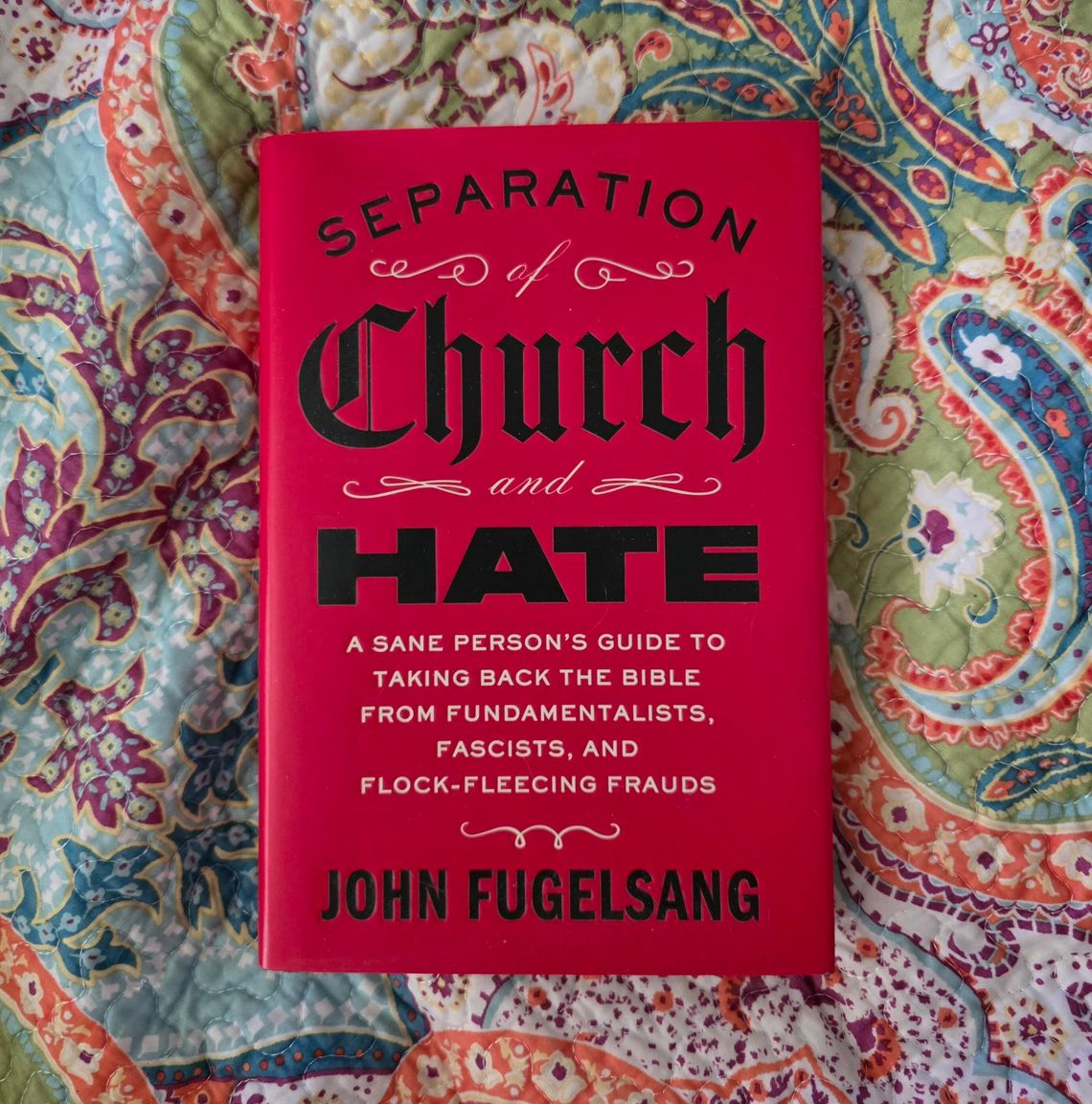
I don't read nonfiction very often–reading is my escape from reality, and let's be real, nonfiction doesn't really facilitate escapism the way that rom-coms or even moody literary fiction do. However, every once in a while, I see a book in the nonfiction area that piques my interest and I just have to pick it up. This week's book is nonfiction, but the writing is so approachable and interesting (despite the topic being a heavy one) that I couldn't put it down.
John Fugelsang’s “Separation of Church and Hate” isn’t just a theoretical critique; it’s a perspective rooted in a truly one-of-a-kind upbringing. As the son of a former priest and a former nun who met while working in a hospital, Fugelsang was raised in a household where the “radical” nature of the gospel wasn’t just a Sunday concept, but a lived experience. This background gives him a unique authority to argue that the book isn’t an attack on faith, but rather a comedic repossession of it. He uses his history to highlight how modern movements weaponizing the Bible often ignore the very person they claim to follow: a nonviolent Jewish mystic who prioritized the outcasts and the marginalized.
With a tone that feels like a witty conversation with a well-read friend, Fugelsang guides readers through a “biblically correct” takedown of modern Christian nationalism. He blends deep research with his trademark irreverent humor to help readers navigate the most contentious topics in modern discourse, from LGBTQ+ rights to poverty and immigration. Fugelsang’s approach is refreshing because he doesn’t just lecture; he provides practical rhetorical tools for those who want to reclaim the narrative of mercy from the “flock-fleecing frauds.” He meticulously points out where certain political arguments have no biblical basis at all, restoring historical and scholarly context to verses that are frequently stripped of their original meaning for political leverage.
Ultimately, “Separation of Church and Hate” is less about “deprogramming zealots” and more about reclaiming the essence of service and empathy. Whether you are a devout believer, a staunch atheist, or somewhere in the “it’s complicated” category, Fugelsang offers a bracing and hilarious reminder that we can disagree on policy without losing our humanity. It is a rallying cry for clarity in a world that often uses religion as a “cloaking device” for tribalism. By the time you reach the final page, you might just feel equipped to take back the narrative of compassion, one scripture-backed and humor-infused argument at a time.
Fun fact: if you're a young Gen Xer or an older Millennial, you might recognize John from his stints on VH1 back in the day. Don't forget to pop over to my Instagram, @allison.the.reader for more fun facts and awesome reads!








Comment
Comments