
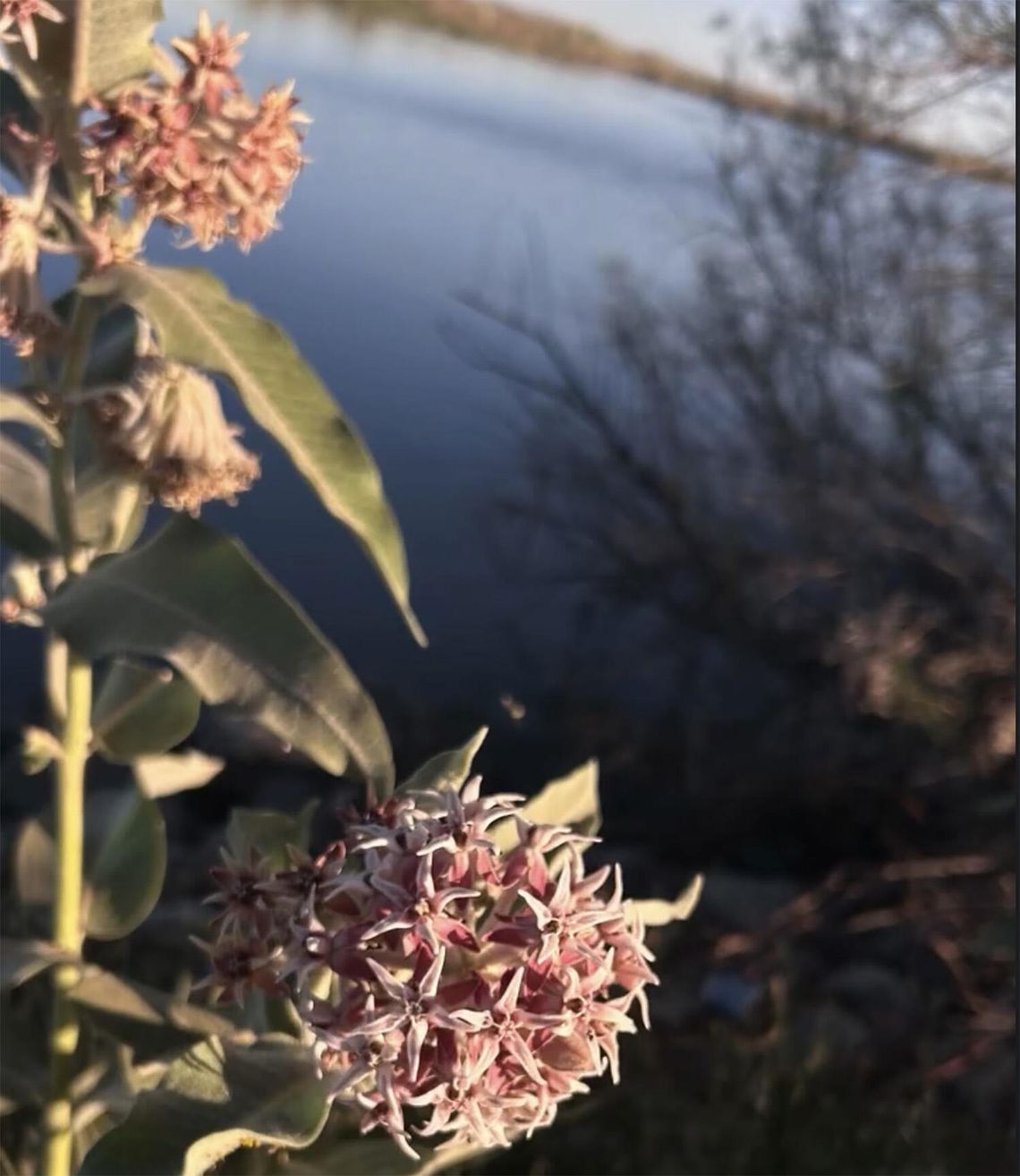
On a warm summer day last June, I was fishing with my brother and sister here in Fallon. I wasn’t getting any bites and was getting bored when I noticed butterflies fluttering around. I rested my fishing rod on the ground and followed them. They led me to a beautiful group of flowers growing by the water where they were landing. I remember thinking, “These flowers look like little shooting stars.” I was amazed at how pretty they were.
I went home and couldn’t stop thinking about those flowers until, in the busyness of the days, they slipped my mind. That is, until recently. I was privileged to grow these plants for a pollinator garden we are helping to develop at Lattin Farms. I found out the plants were part of the genus Asclepias, commonly known as milkweed.
I was given seeds to plant, fresh from the S10 Plant Systems room fridge, that we harvested last fall from the ditch bank near the school. Milkweed seeds need cold to germinate. They require at least a 30‑day period in a moist, cold environment — a process called stratification. You can easily replicate this by wrapping the seeds in a damp paper towel, placing them in a Ziploc bag, and putting the bag in the fridge.
Remembering my fishing trip, I recalled how milkweeds often grow alongside water, so I filled the bottom tray with water and watched it rise until I was satisfied. I let the seeds sit for a day before Mrs. Sammons told me I should bring them into the classroom to pamper them on a heating mat (which is optional and not required for germination). She was worried they might not come up because of how much water they were resting in.
Surprise! Mrs. Sammons was thrilled when, after a day or two, they started coming up — and a lot of them. Once they germinated, I transplanted them into slightly larger pots. You can see them here in this photo.
Some people view these plants as weeds, but these “weeds” have shown me that there is beauty in even the smallest, simplest things, and I think it’s important to notice them. That brings me to why I’m writing this week’s column.
I’m growing milkweed not only because I think it’s pretty but because these plants are valuable to Nevada and to the pollinators that live here. Milkweeds are the only food source for monarch caterpillars. Have you ever wondered why you haven’t seen monarchs as much lately? Monarchs have faced massive population loss and are now endangered. Scientists say this is due to widespread habitat loss, increased pesticide use, and the impacts of climate change.
To some people, these butterflies are just insects. I say they are much more than that. Monarchs are an important part of the global ecosystem, and biodiversity is always worth protecting.
So what can we do? For starters, include milkweeds in your yard along with other pollinator‑friendly plants such as yarrow or goldenrod. Planting a variety of flowers helps keep pollinators fed all season, giving them the fuel they need for migration. I also suggest decreasing pesticide use wherever possible. Together, we can help restore monarch habitats.
If you don’t have any milkweed in your yard yet, I encourage you to let one stand flourish for a season. I think people would like to see the monarch butterfly thrive like it once did. Let’s work together and make that happen.


















Comment
Comments