
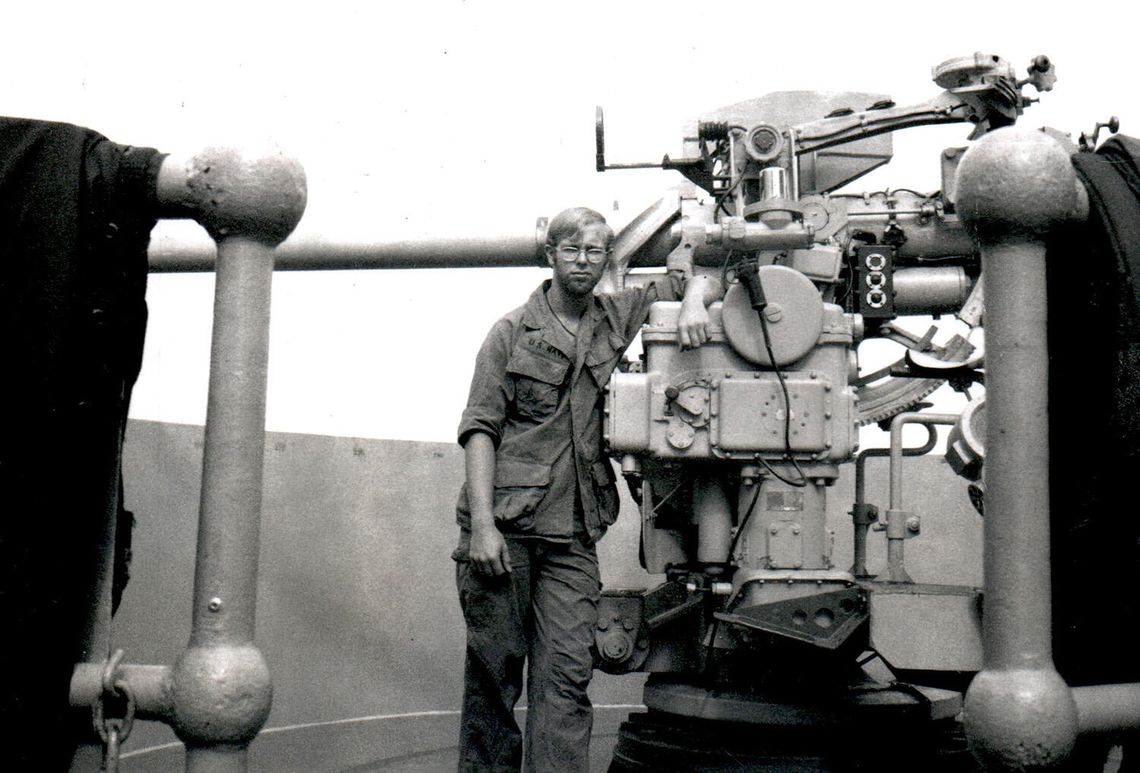
Three weeks before National Vietnam War Veterans’ Day, observed March 29, 2025, I made a promise. That promise, which I honor now and forever, is to never forget.
Most people don’t realize that 2.7 million members of the U.S. military served their country in Vietnam. They, and their families, made sacrifices that should never be forgotten. Please join me in keeping the promise to remember and honor Vietnam Veterans on March 29 at 1 p.m. at the Fallon City Hall courtyard for a special ceremony.
My name is Stuart Cook. I was a U.S. Navy riverboat sailor who served in Vietnam from July 4, 1970, to July 4, 1971. I’m now the chairman of the Fallon, Churchill Vietnam War Veterans’ Day Committee.
Unlike in other wars, American veterans fighting in Vietnam returned home without being welcomed or thanked for their service. There were no adoring crowds waiting when we came home. Instead, we were spat on and called baby killers or mercenaries by some of our own countrymen, while others simply wouldn’t make eye contact with returning soldiers.
We owe it to this generation, and those to come, to teach the true history of the Vietnam War, and share the stories of sacrifice, service, and valor found among our Vietnam Veterans.
If you believe honoring our veterans is important, and I think you do, then I hope you will help preserve their legacy. We are losing our aging Vietnam Veterans at the staggering rate of about 500 a day. Eventually, there will be no one left to tell their stories.
I was just 19 years old when I flew from New Jersey to Travis Air Force Base in California, and then on to Saigon. What a culture shock! When the plane doors opened, the whole country seemed to smell of fish heads and rice.
We were about to head to the Annapolis Hotel when a soldier warned us to watch for anyone trying to attach a bomb to the bus. At the hotel, they mustered us and assigned guard duty. I got the midwatch, midnight to 4 a.m., even though I had very little sleep over the previous three days.
They handed me a plastic M-16. It was the first time I had seen a gun like this, let alone held one. My training took all of a minute: put the magazine here, pull this back, flip the lever to automatic, point, and pull the trigger.
The next morning, I went to the TV lounge. Only one other sailor was there watching the news. A riot was on the screen. After a few minutes, I said, “That looks familiar.”
A caption appeared: Asbury Park, New Jersey — my hometown.
Weeks later, when the mail caught up with me, I learned that my father had been the incident commander for all mutual-aid fire departments during the riots. He was standing next to a fire truck when it came under fire, and had to pull all firefighters back until they had a secure area.
I’m in Vietnam and haven’t been shot at yet, and my father in my hometown comes under fire. There’s something wrong with this picture.
My dad had been a Navy corpsman with the Fourth Marine Division during World War II. He received three Purple Hearts from Iwo Jima, Saipan, and Tinian. As a kid, I remembered his nightmares and him picking shrapnel out of his body. Now I found myself worrying about both of us.
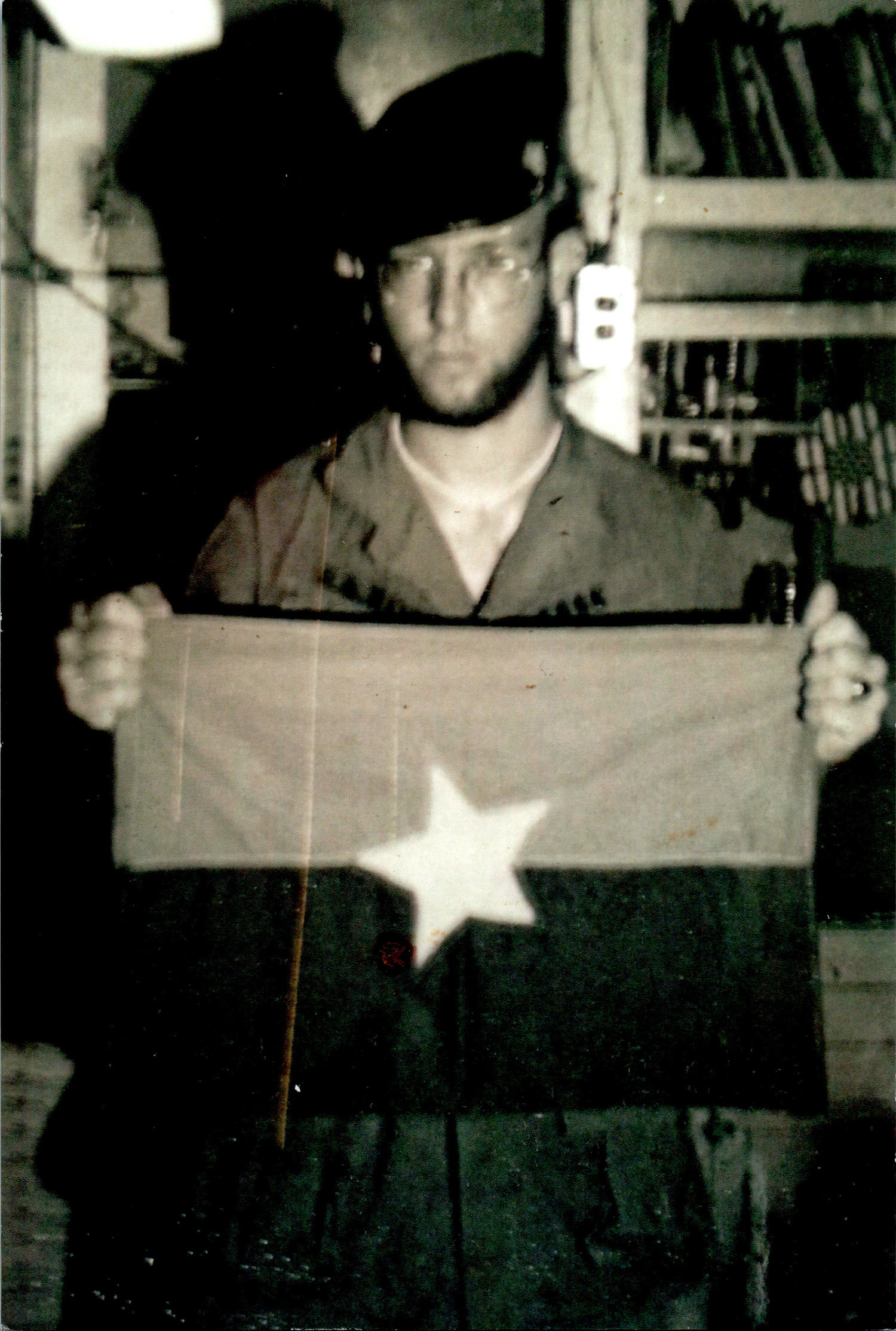
The next day, I stepped outside, hoping to find a French restaurant that other sailors were talking about. I hadn’t gone 50 feet when two teenagers on a Honda 50 zipped past a soldier and grabbed his watch. As they sped away, a Vietnamese police officer fired his weapon and killed both boys.
The soldier calmly picked up his watch and kept walking.
Two things crossed my mind: that soldier had been here too long, and “Toto, we’re not in Kansas anymore.”
Back in the TV lounge, a sailor from Texas handed me a short-timers calendar. The calendar had a picture of a woman whose body was divided into 365 squares. I shaded in three squares. I had 362 days left.
I honestly thought I’d never make it.
When I arrived at Naval Base Nha Be, I saw many riverboats and asked which one I was assigned to.
“Yours is out there in the middle of the river,” I was told. I looked out and saw a ship with a group of boats tied alongside it. “We have a special one for you,” the man said. I didn’t like the sound of this comedian.
We tied up to a barge next to the ship. There are two landing craft on the barge that look like they were at the Battle of Normandy and had been in a field for the last 20 years. The man said, “That one is yours.” I got my Jersey mouth on, and he said you don’t know me well enough to talk to me that way.
He explained that I had been hand-picked to convert three of those landing craft into minesweepers and introduced me to the other four members of the crew. My job was to pull the engines and rebuild them aboard the ship in the internal combustion engine shop.
It didn’t take long to learn that these barge engines were beyond fixing. I went to the master chief and told him the engines weren’t worth saving. He agreed, and within a week, six brand-new engines arrived.
That’s when I learned he was known as Pappy Palmer, or “Older Than Dirt.” A World War II veteran, he had three destroyers shot out from under him. After forty-two years in the Navy, he was serving his final year in Vietnam.
There was nothing that man didn’t know about engines, and he had a talent for keeping his sailors out of trouble with the Commanding Officer.
All of this happened during my first month in Vietnam. I still had 11 months to go, and hadn’t even been on the river aboard my boat yet.
I tell these stories not for sympathy, but so people understand the things you never hear about Vietnam.
Help us remember those soldiers who never got the welcome home that all our military men and women deserve on Sunday, March 29, at 1 p.m. For more information, call 775-217-2292.
Stuart Cook is a career Navy fireman and chief. He served as the civilian federal Fire Chief at NAS Fallon for five years before retirement.





Comment
Comments