by Edith Isidoro-Mills --
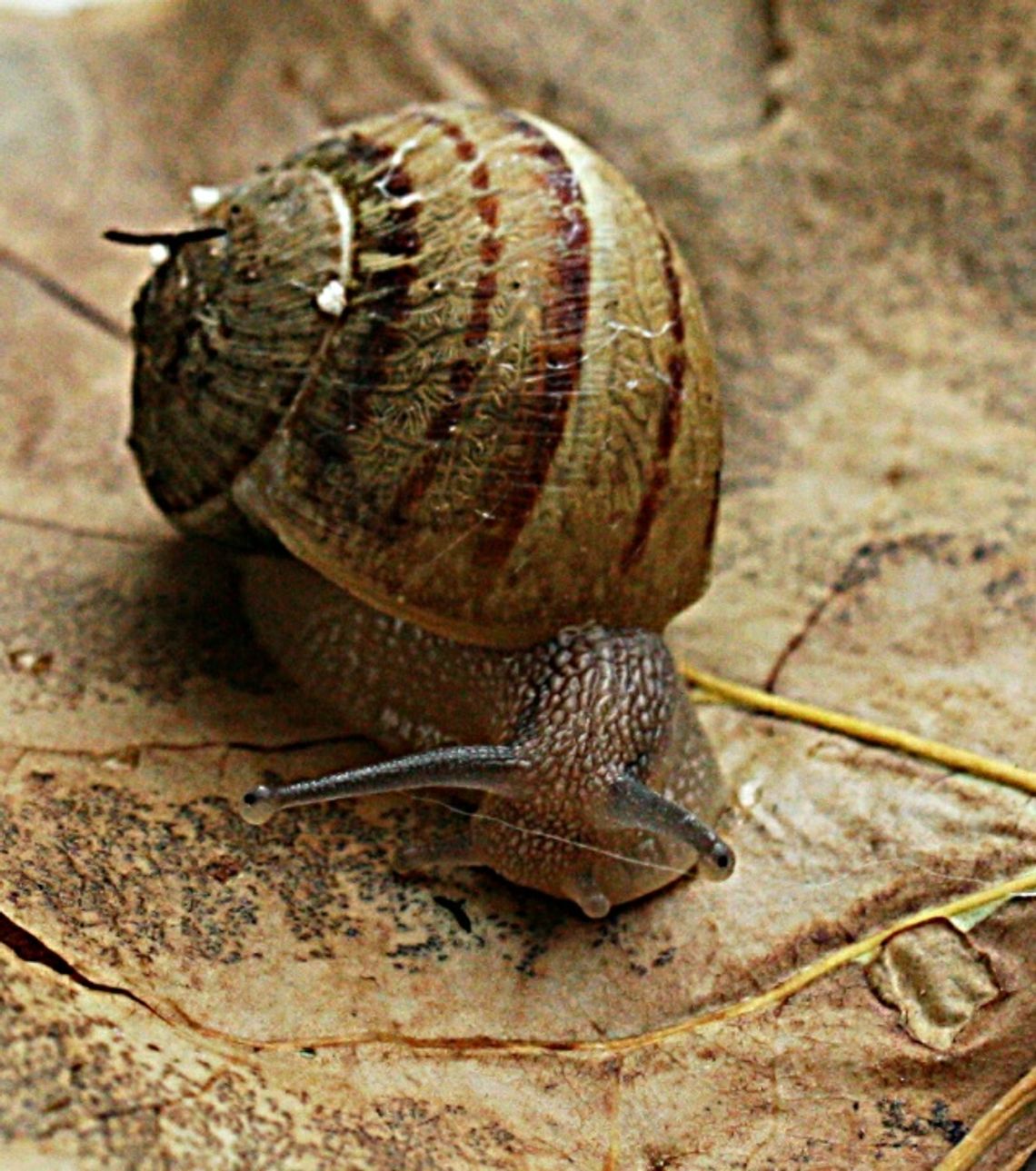
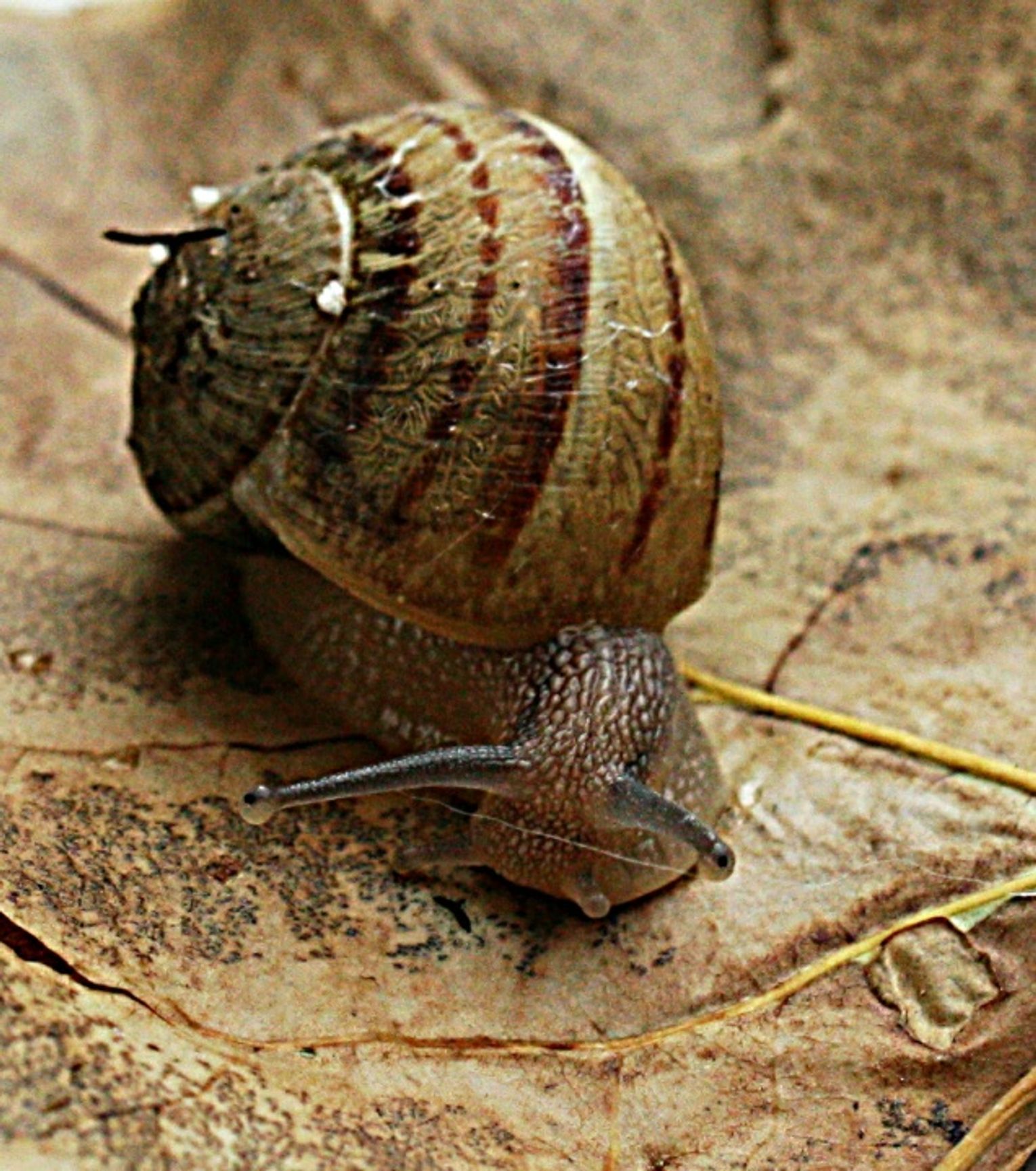
They're back again this year. I have snails in my garden. I've been hand picking but that just isn't enough. It's time to consider some other method of getting these critters out of my garden. If you see slime trails and you can't figure out what is eating them, it might be snails.
The snails in my garden are probably the common brown garden snail, Cornu aspersum (https://wiki.bugwood.org/HPIPM:Brown_Garden_Snail), which was intentionally and accidently introduced to North America by Europeans. These snails are native to Great Britain, Western Europe, and regions around the Mediterranean. In France, Spain, and Portugal, snails are a delicacy called Escargot. You can find recipes for this delicacy on the Internet. Europeans who were homesick for the cuisine from the old country brought them from Europe intentional and introduced them to their gardens. Then there were accidental introductions that can occur when one brings plant material from overseas to propagate in their gardens, nurseries, or greenhouses. This is easy to do because eggs and recently hatched snails are difficult to find unless you are specifically looking for them.
Snails feed on a wide range of vegetation and can be a pest in your garden. This is especially true in areas of the garden that are regularly watered and have lots of organic matter for snails to hide under during the warm daylight hours. The dry, hot climate of Nevada is not hospitable to snails. So if you have snails, they probably came from nursery stock infested with snail eggs or recently hatched snails you couldn't see.
Brown snails do have natural predators such as toads, snakes, birds, and turtles but these are rarely enough to control the snails since they can out produce any of their predators. Still, I would encourage toads, non-poisonous snakes, and birds to take up residence in your garden since snails are not the only pest they help control.
Knowing the conditions that snails find ideal is the first step in controlling them. Snails like shady damp locations and need dark moist cover for the hot periods of the day. They do most of their feeding at night. Overcast, damp weather can also bring them into the open. Knowing this is important if you see your plants are being eaten but can't figure out why. The only time you will see snails is in the evening or very early morning. You may also see them when the sky is overcast and it has just rained.
Snails love flowerbeds irrigated with sprinklers in the late afternoon or evening hours. To discourage snails, try watering only with drip systems. If you must water with a sprinkler, do so only in the morning. This will allow vegetation and organic matter to dry out and be less inviting to snails.
Reducing snail populations requires a combination of picking them out of the beds and applications of iron phosphate baits. Iron phosphate baits are effective on the small snails that are difficult to see or pick off vegetation. However, these baits are less effective on the larger snails. Control the larger snails by picking them off the ground and vegetation during the early morning hours or use a flashlight at night. You can also go out after a rain shower to pick snails. Dispose of them in the garbage after you have thoroughly smashed them up. Smashing them up is important because they can crawl out of trash barrels.
As mentioned above, you can eat the brown snails but be sure they are brown snails since some snails are not edible. I wouldn't eat brown snails unless you are truly adventurous and have not put any chemical pesticides in your garden. If you feel adventurous, garden organically, and are sure you only have brown garden snails, follow the instructions for how to prepare snails for eating at this link. Myself, I'm just smashing and trashing large brown snails.
Sign up to receive updates and the Friday File email notices.Support local, independent news – contribute to The Fallon Post, your non-profit (501c3) online news source for all things Fallon.
Share
Rate
Comment
Comments
There are currently no comments. Be the first to add your comment.







 Page no. 1
 Page no. 2
 Page no. 3
 Page no. 4
 Page no. 5
 Page no. 6
 Page no. 7
 Page no. 8
 Page no. 9
 Page no. 10
 Page no. 11
 Page no. 12
 Page no. 13
 Page no. 14
 Page no. 15
 Page no. 16




Comment
Comments