
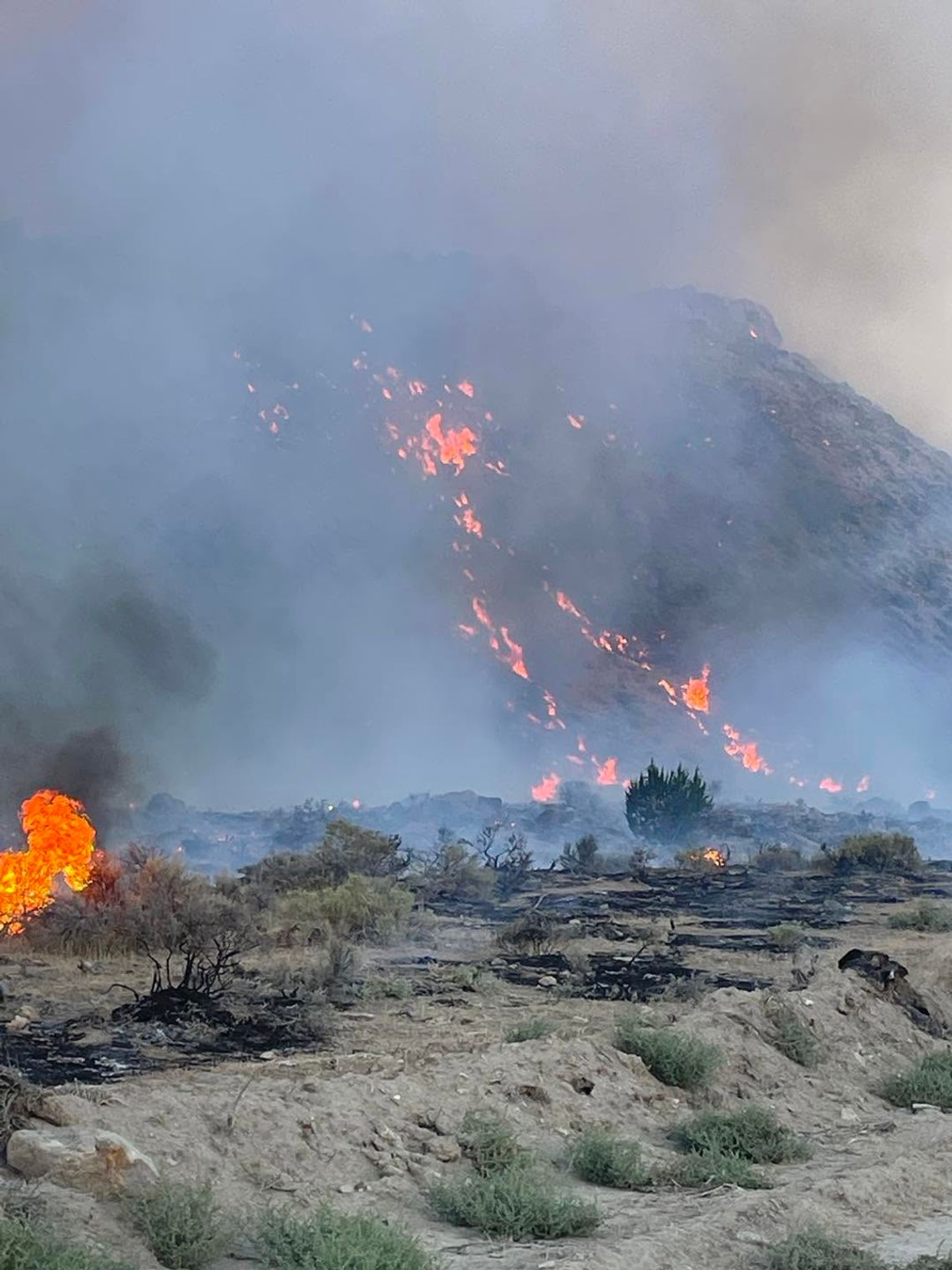
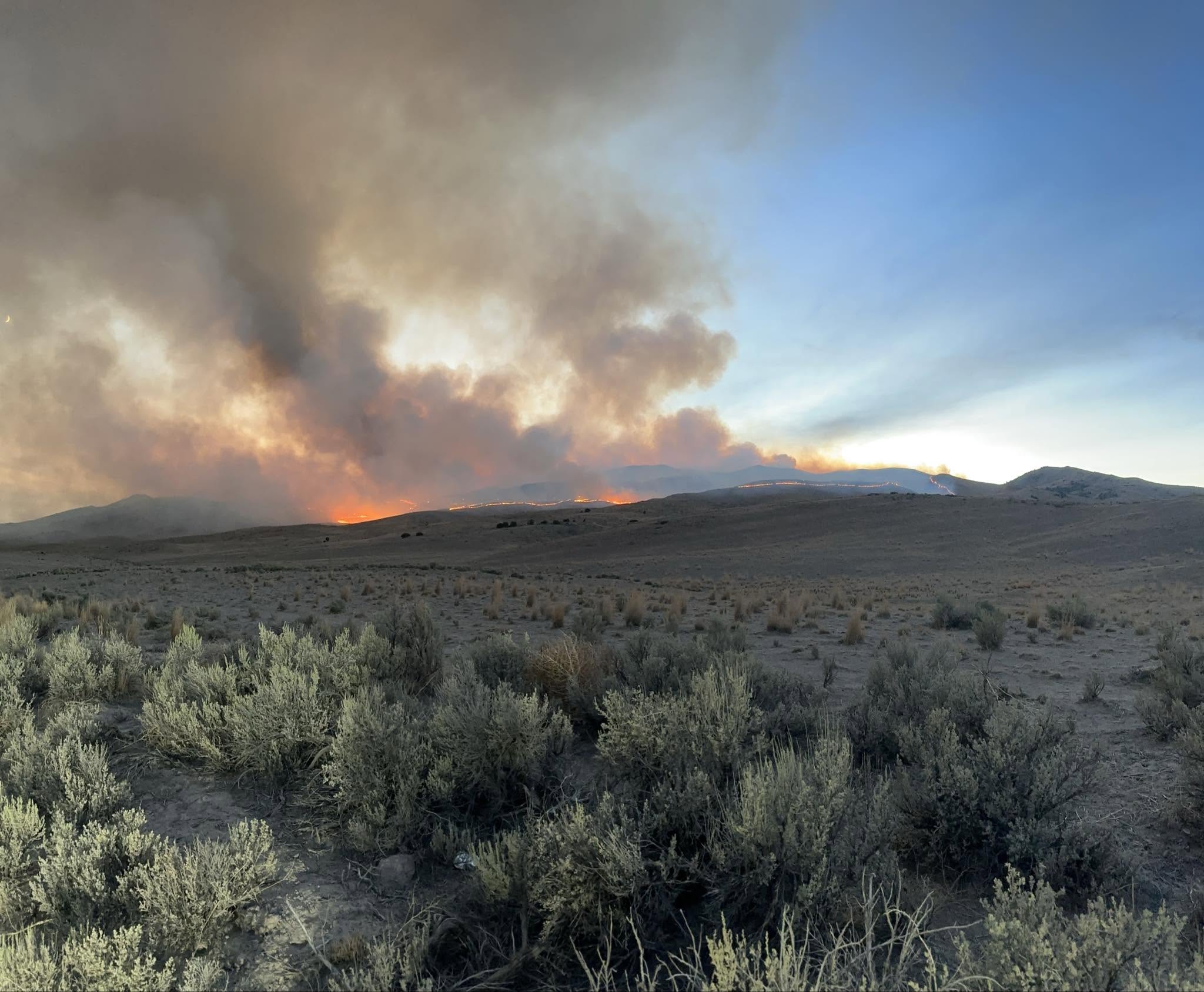
More than 24,500 acres have burned in the lightning-caused Shoshone Fire in the Clan Alpine Mountains northeast of Fallon, where firefighters have made significant progress containing the blaze despite steep terrain and hot, dry conditions.
Located approximately 58 miles northeast of Fallon. On Monday, August 24, the National Interagency Fire Center reported 92% containment and 24,513 acres burned.
The fire was reported Saturday, Aug. 15, and was determined to have been caused by lightning. The Bureau of Land Management reported Wednesday, Aug. 19, that 217 personnel were assigned to the incident.
The fire is burning in the Clan Alpine Mountains, a remote range that is also home to ranching and grazing operations, including the Alpine and Clan Alpine ranches, as well as livestock, wild horses, and other wildlife. Portions of the mountain range also border lands associated with the Fallon Range Training Complex (FRTC). Officials have not reported that the ranches, livestock, or FRTC lands are threatened. Pictured above: Shonshone Fire taken the evening of Aug. 16. Photo by US Wildland Fire Service, courtesy of BLM
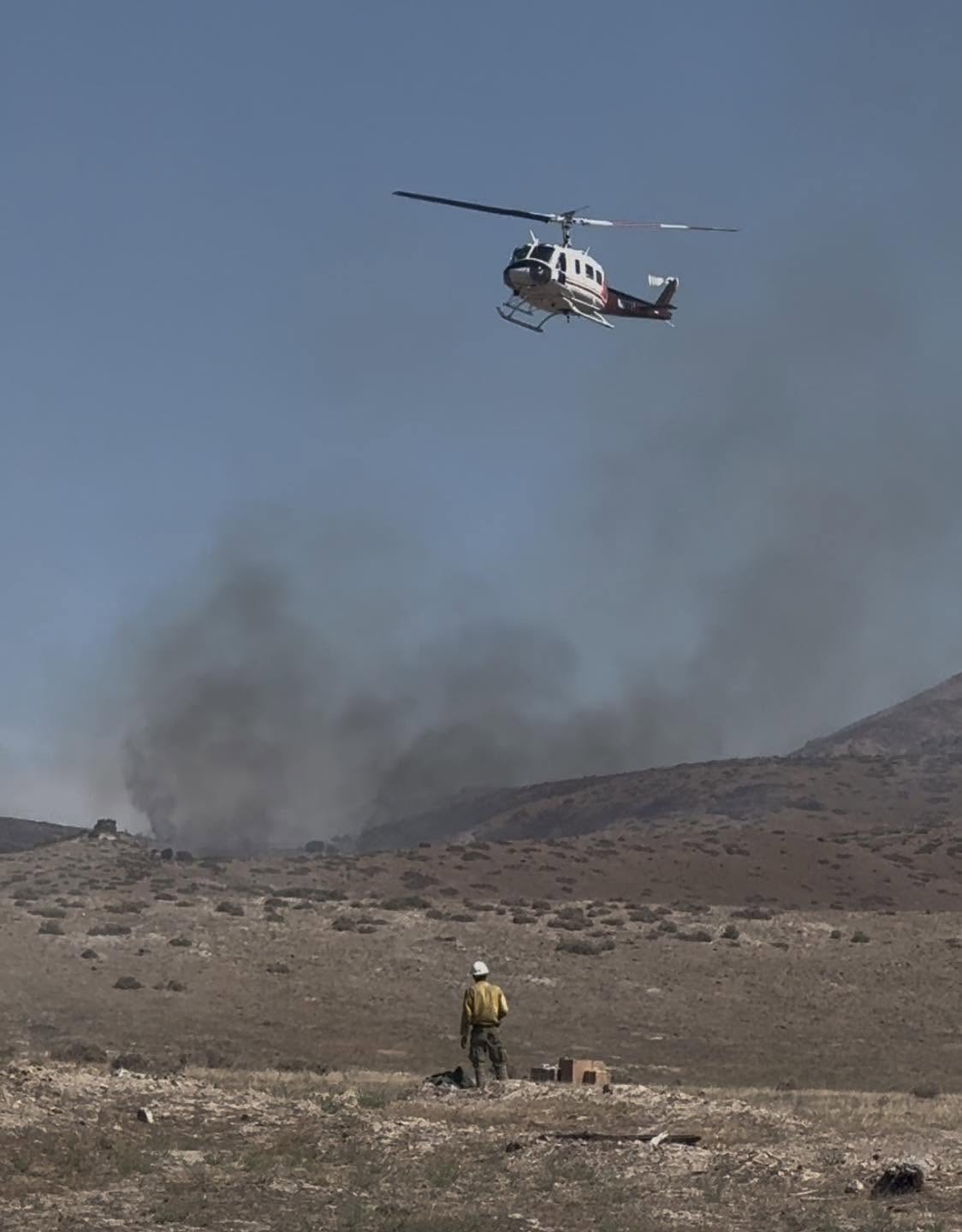
When the fire was 32% contained on Aug. 20, firefighters were making progress securing portions of the fire's edge where terrain and fire behavior allowed crews to work directly. An anchor point had been established at the heel of the fire, with crews working south and east to strengthen containment lines. Firefighters also used a process known as cold trailing, checking the fire's edge by hand for remaining heat and extinguishing hot spots.
During that operational period, a slopover occurred on the northwest portion of the fire, forcing crews to adjust their strategy. A slopover occurs when a wildfire crosses an established or intended containment line but remains relatively small and manageable. Type 1 crews evaluated whether they could attack that portion of the fire directly, but steep terrain and fire behavior made a direct attack impractical. Firefighters instead incorporated the area into a larger indirect containment area.
Crews were also preparing containment lines along the west and northwest portions of the fire, while firefighters on the east side worked to secure containment lines and mop up. Dozers were used where terrain allowed.
Other fires in the region have intermittently brought smoke into the Lahontan Valley, affecting air quality. The Hawk Fire northwest of Reno started Saturday, Aug. 22. By Tuesday, the fire was 27% contained and had burned 15,051 acres. As of the same time, the Bug & Stallion fires had burned 93,733 acres and were 97-98% contained.
BLM predicted continued hot and dry conditions, with thunderstorms that could bring gusty outflow winds and the potential for new lightning-caused fires.
Crews will continue working where conditions allow them to do so safely.
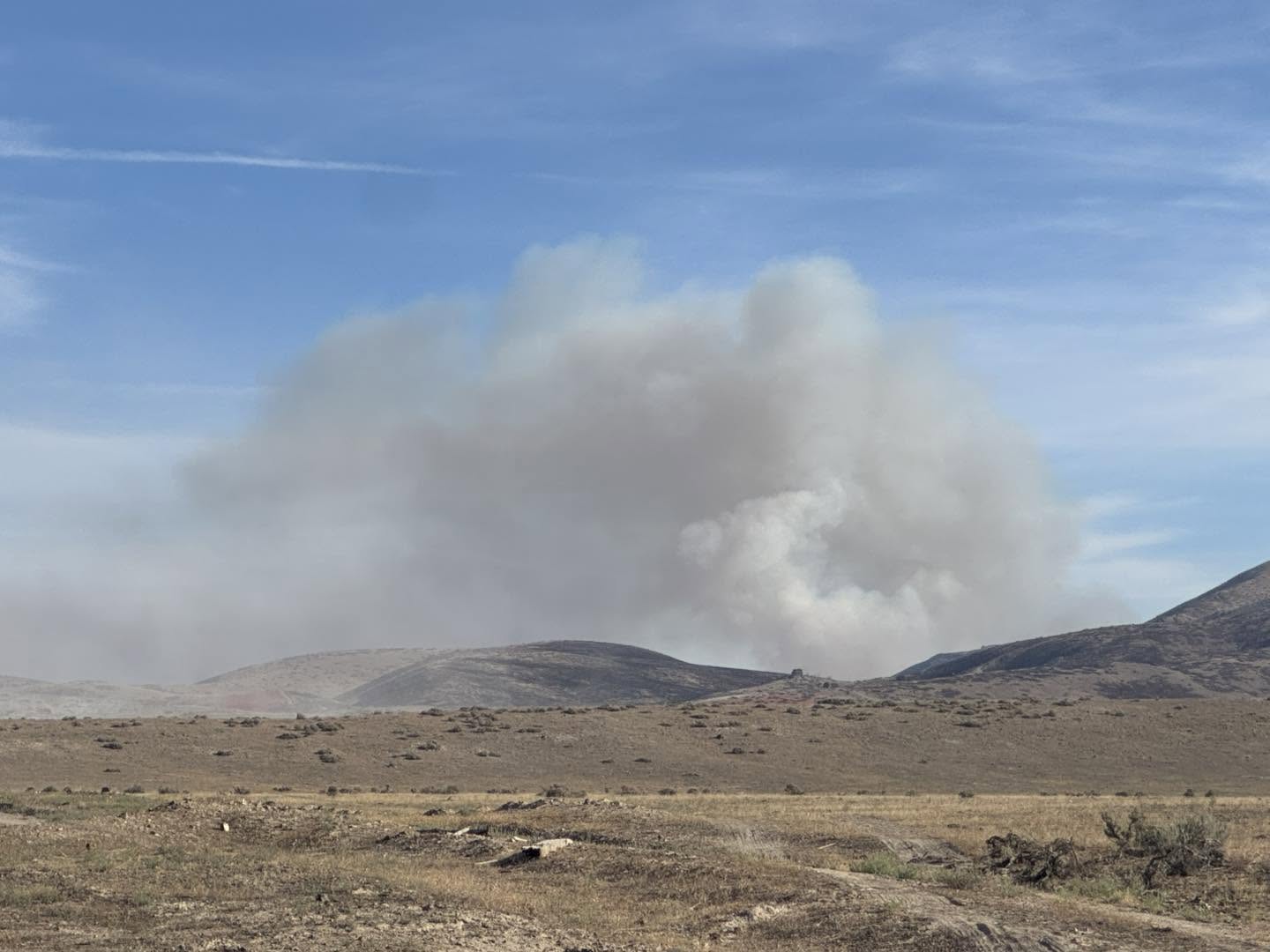
Pictured above, fired update Aug. 18. Below: Fire update Aug. 19. All photos by US Wildland Fire Service, courtesy of BLM.

















Comment
Comments