
 Rachel Dahl
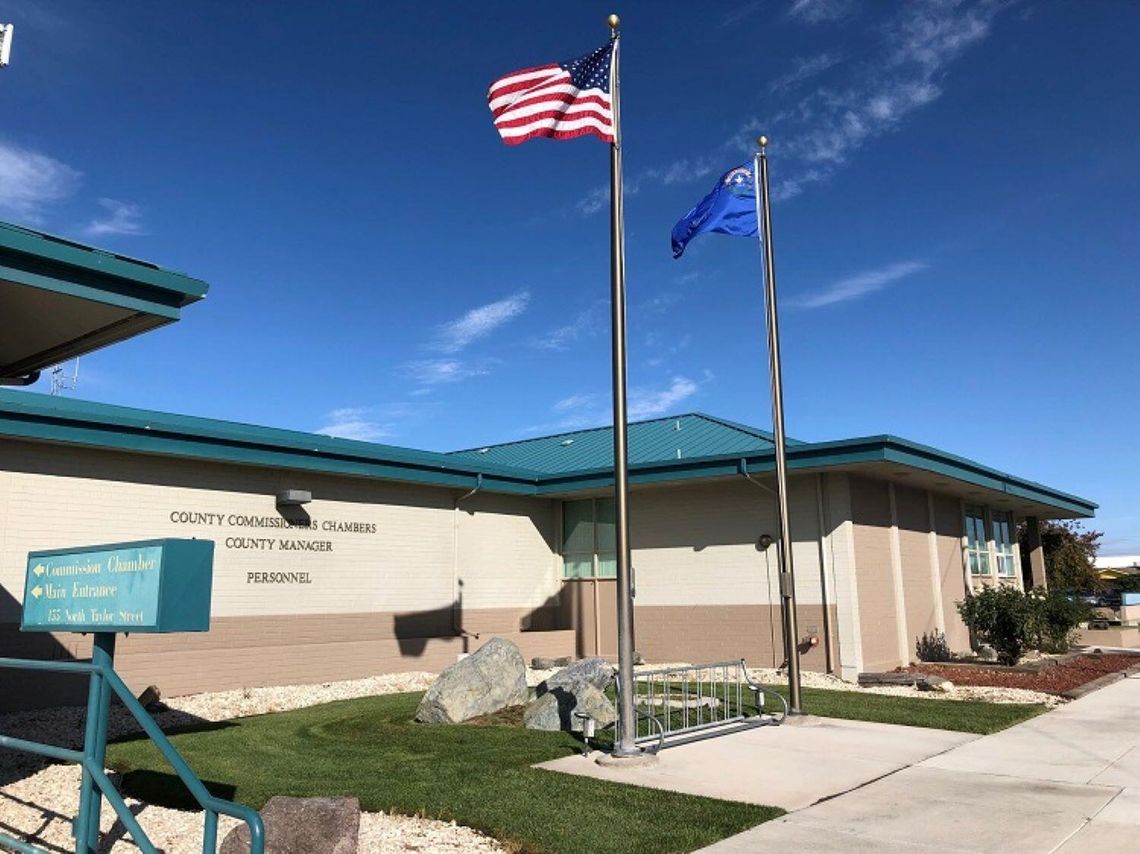
Churchill County commissioners took action on two key issues at their recent meeting —advancing a fire funding measure to the ballot and moving quickly to fill a leadership gap in Social Services.
The board unanimously approved a resolution to place a renewal of the county’s fire department ad valorem tax before voters in the November 2026 election. The proposed measure would continue an existing levy of 3 cents per $100 of assessed property value, a tax that has been in place through voter approval since 2008, renewed in 2014 and 2020. It is currently set to expire June 30, 2027.
County officials emphasized the tax is restricted in use and cannot be diverted to general operations. Instead, the revenue is dedicated specifically to major fire equipment and apparatus purchases.
Fire Chief Jared Dooley outlined how those funds have been used over the past six years, pointing to significant capital investments that would not have been possible through the department’s base budget. Among them were two new fire engines costing more than $2.1 million combined, upgrades to aging trucks, replacement of breathing apparatus equipment, and new Type 6 brush trucks used across rural parts of the county.
The department is also facing increased demand. Call volume has risen from roughly 400 calls annually six years ago to more than 500 today, while equipment costs continue to climb sharply. Dooley noted that replacing two aging fire trucks, both more than 30 years old, could cost approximately $1.8 million each based on recent estimates.
Commissioners expressed strong support for putting the question back to voters, framing it as both a public safety necessity and a demonstrated return on taxpayer investment. The measure will now appear on the November ballot, where voters will decide whether to extend the funding for another six-year period.
Commissioners also discussed staffing challenges within the county’s Social Services department following the resignation of longtime director Shannon Ernst, who has accepted a new role as administrator of the Central Nevada Health District.
County officials described the position as significantly evolving in recent years, now encompassing expanded responsibilities, including oversight of programs, including CART (Churchill Area Regional Transportation) and the Pennington Life Center (senior center). With Ernst’s departure, commissioners face a timing challenge: recruiting a qualified replacement while a countywide compensation study remains unfinished.
The board ultimately approved immediate recruitment for the position and adopted a temporary compensation approach to stay competitive in the hiring market. Rather than relying solely on the current pay scale, which ranges from about $104,000 to $140,000, they aligned recruitment with anticipated adjustments from the ongoing compensation study, placing the role closer to a range of roughly $115,000 to $155,000.
To bridge that gap, commissioners approved posting the position at Grade 81 on the current pay scale, with the understanding that it will be adjusted once the new compensation structure is formally adopted.
There was clear concern among commissioners about continuity and institutional knowledge. Ernst has led the department through years of program growth and operational changes, and officials stressed the importance of having a replacement in place before her full departure.
“I think it would really harm the department if we did not have somebody there,” Chris Spross, county manager, said, pointing to the complexity of the role and the breadth of services involved.
To help maintain stability during the transition, the board also approved a $2,000 monthly stipend for Ernst to remain in an interim support role for up to 60 days while recruitment is underway.
Assistant County Manager Joe Sanford provided an update on the ongoing compensation study, reporting that nearly all departments have submitted feedback on position classifications and pay ranges, which have been forwarded to consulting firm Baker Tilly for review. The firm is currently incorporating that input and is scheduled to be on-site April 1 for in-person meetings with departments. Commissioners will also have an opportunity to meet individually with the consultants during that visit, as the county works toward finalizing a revised compensation structure in the coming months.












Comment
Comments