
 Leanna Lehman
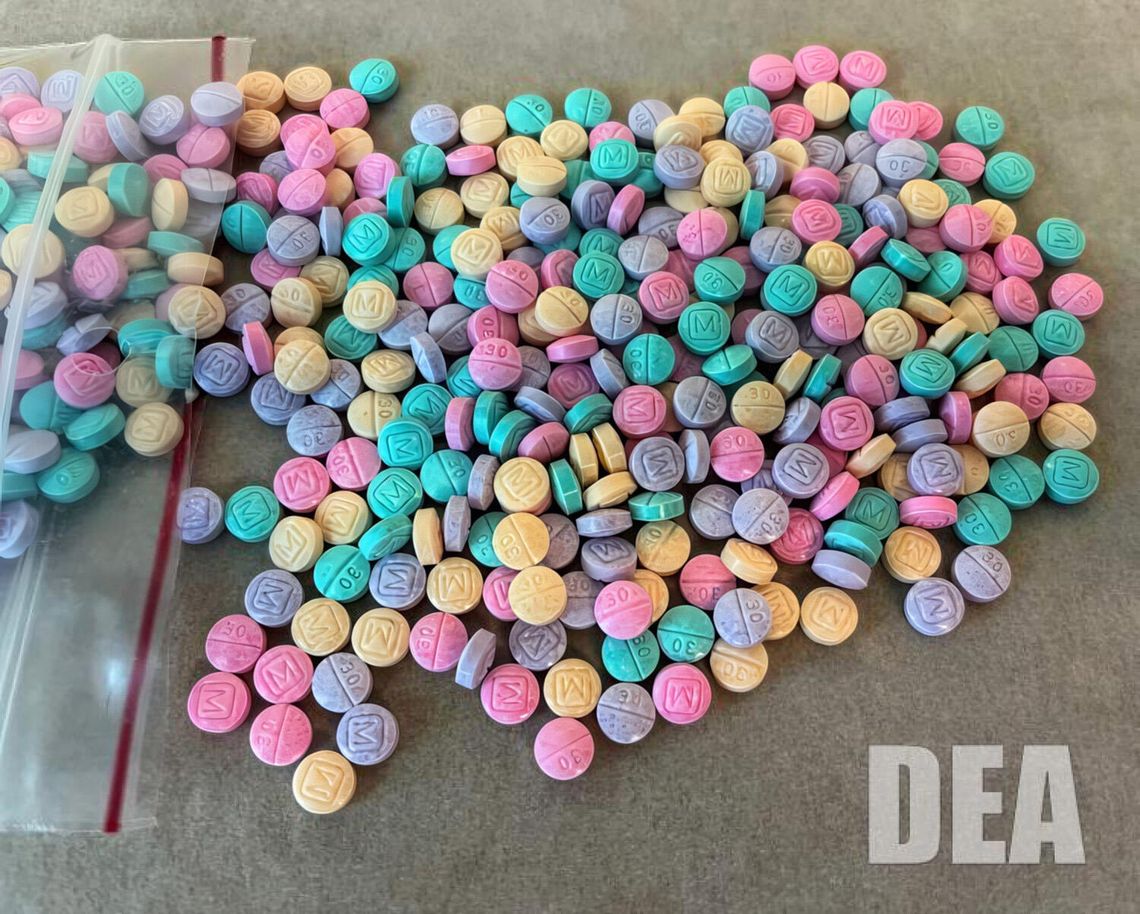
The North Central Nevada Narcotic Task Force (NCNTF) presented at the Churchill Community Coalition's quarterly meeting on Wednesday, March 18, to update the community on recent Task Force activity and narcotics trends in Churchill County.
NCNTF is a multi-agency task force comprised of personnel from the Nevada State Police Investigation Division, the Fallon Police Department, and the Churchill County Sheriff’s Office that partners with other regional task forces and federal agencies.
One primary area of concern for NCNTF is the rising use and abuse of fentanyl. Task force officer Garrett Long reported that officers seized nearly 62 grams of fentanyl, or 30,900 lethal doses, in 2025–26. “Although that is a small number, it is a drastic impact on the community,” Long said. He noted the increase aligns with statewide data showing a 250% rise in fentanyl overdoses since 2020.
Task Force Detective Carl Diggs said while fentanyl can be inhaled or smoked, the pill form is driving the most deaths. He explained that drug trafficking organizations manufacture counterfeit pills to resemble oxycodone or colorful candy. “I mean, we've seen it in kind of just every different form,” he said. “The cartels are just trying to find ways to get it into the United States.”
“The one thing with fentanyl is that a lot of these drug trafficking organizations are coming in from Mexico,” Diggs said, adding that precursor materials are often sourced from China, manufactured in pill labs in Mexico, and smuggled into the United States.
The most dangerous aspect of fentanyl pills is the inconsistent dosage. “You get these users that are used to using two milligrams of the fentanyl,” Diggs said. “One pill might have two milligrams; the next pill might have five milligrams. Within that pill capture, when you're a user, you're thinking, “I'm taking a two-milligram pill with fentanyl,' however, you get a five-milligram pill, and you end up overdosing.”
Despite an increase in fentanyl use, methamphetamine abuse remains a significant problem in Churchill County. The drug, which stimulates the body and the central nervous system, can cause anxiousness, a false sense of confidence and power, aggressive or violent behaviors, and consistent talking, explained Diggs.
Methamphetamine today is different from that seen in the 1990s. The Task Force says that local manufacturing is rare. Instead, meth is being mass-produced by drug trafficking organizations, primarily from Mexico.
Today’s meth is reportedly higher in purity, cheaper to make and to buy, and is far more accessible. Some studies report that it also causes more severe behavioral effects than those seen 30 years ago. One factor, however, has not changed—meth has a strong correlation with property crimes and crimes of violence.
Meth overdoses, which often occur in the form of seizures or heart attacks, are far less common than with fentanyl and opiates. According to Diggs, the body can better regulate stimulants, whereas opioids can suppress breathing to the point of death.
Diggs said cocaine use is increasing, describing it as “making a huge comeback.” Additionally, the drug’s “short high” can lead to high and frequent use.
As fentanyl-related deaths rise, some users are turning back to stimulant-based “party drugs,” said Diggs.
Prescription opiate use is also an area of concern for the Task Force. While heroin is occasionally encountered, most opiates are seen in pill form, including both legitimate prescriptions and illicit counterfeit pills.
These counterfeit pills, often referred to as “Dirty 30s” or “Blues,” are made to resemble 30 mg oxycodone tablets, typically blue and stamped “M30.” These are often pressed with fentanyl in uneven amounts, making them especially dangerous.
“Unfortunately, I think in the last five years, we've had almost 100,000 fatalities every single year just from opiate deaths alone,” Diggs said. Many individuals begin with prescription pain medication, build tolerance, and transition to stronger substances.
Prescription drug use, even when correctly prescribed and used, can lead to the use of other drugs, explained Diggs. He noted a recent case in which someone had a prescription, but also had a methamphetamine abuse problem. “They were just doing trades on the side… they're dishing out their oxy to get the methamphetamine.”
Other commonly abused prescription drugs include opioids such as morphine and oxycodone, as well as benzodiazepines like Valium and Xanax, and stimulant medications such as Ritalin. “From there, it's either abused or sold off to fund other narcotic activities,” Diggs said.
The Task Force is also seeing an increase in psilocybin mushroom use and illicit marijuana sales. Marijuana, which can act as a depressant, stimulant, and hallucinogen, is increasingly consumed through edibles such as baked goods and gummies, raising concerns about accidental ingestion by children. With legalization, officers are also seeing more cases of adults providing marijuana to minors.
Task Force Sgt. Meghan Madrigan said another growing concern is drug-endangered children. “That's another really hot topic right now,” she said, noting increased exposure to narcotics, drug use, and drug sales environments.
Despite the challenges, Task Force officials said they remain focused on their mission to disrupt illegal narcotics trafficking and protect Churchill County and the surrounding areas.
“We are here to assist our community,” Madrigan said.





Comment
Comments