
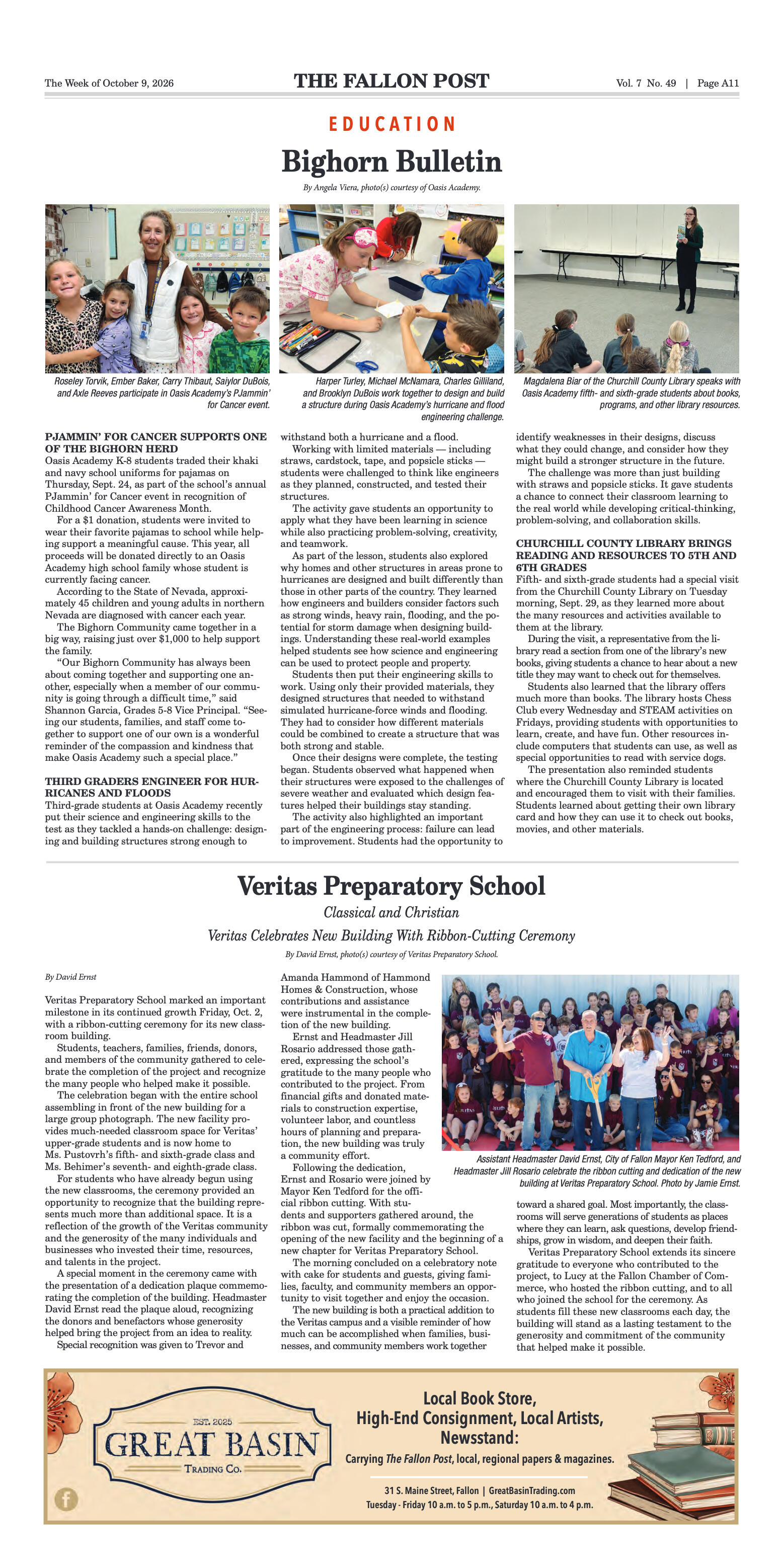
The Veritas Board of Directors met on Tuesday, March 10, to discuss several important items related to the school’s continued growth. Chief among them was the growing need for additional classroom space and the challenges of meeting state and local construction requirements.
Enrollment at Veritas has continued to rise this spring, even after the departure of several military families between December and February. As a result, many classes are now at—or very near—capacity.
“We generally cap class sizes at 20 students, and sometimes fewer depending on the class,” said Headmaster Jill Rosario. “Several of our classes are already at or just below that cap, which leaves little room for new enrollments next year.”
One of the most pressing needs is in the 3rd/4th-grade combination class, taught by veteran teacher Gretchen Felte. “As it stands, the current enrollment doesn’t leave any room for new students next year,” Rosario said. To address this, the board approved adding a dedicated 4th-grade teacher for the 2026-2027 school year, along with a half-time music and art teacher.
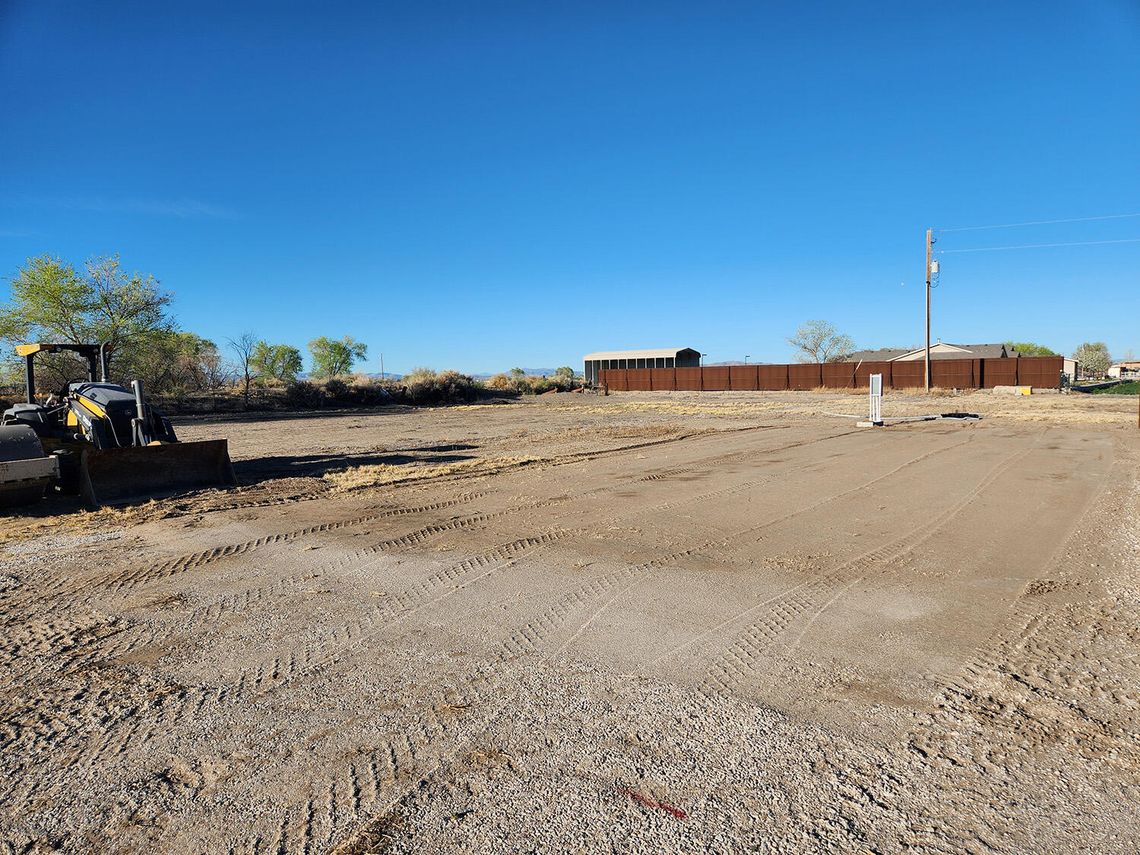
While this decision will allow the third and fourth grades to be separated into individual classes—an important step forward academically—it also highlights a significant challenge: there is currently no available classroom space to accommodate the expansion.
School leadership has been working toward a solution since last summer.
“We’ve been planning for new classrooms for quite some time,” said Assistant Headmaster David Ernst. “Our goal was to have a new building completed by the beginning of 2026, but we’ve run into ongoing permitting issues.”
Initial plans involved bringing in modular classroom buildings from Grass Valley. However, that option was ultimately ruled out when it was determined that the units, despite being in excellent condition, were too old to meet current permitting standards. The code states that any buildings moved onto a property are subject to the same requirements as new construction, so moving modular buildings poses the same permitting challenges.
The plan then shifted to stick-built construction, but that approach also encountered obstacles, particularly regarding state fire safety and water access requirements.
State regulations require either proximity to a fire hydrant or the installation of a fixed water system capable of supplying a significant volume of water. Veritas explored several potential solutions, including building a pond, connecting to a water source at the Rafter 3C Arena, and drilling an additional well.
“We were hoping that our fire department’s Class 1 ISO certification might satisfy the requirement,” Ernst explained, “but ultimately, that was not accepted by the state.”
After evaluating multiple options, the school has determined that installing a standing water tank is the most viable path forward. While this solution meets regulatory requirements, it also adds tens of thousands of dollars to the overall construction cost.
Despite these challenges, interest in Veritas continues to grow. School leaders report a noticeable increase in inquiries from families seeking enrollment for both the current and upcoming school year.
“Some parents are looking for stronger academic rigor,” Rosario noted. “Others are concerned about the social environment their children are experiencing. Many are seeking a Christ-centered classical framework for their students.”
Even as the school navigates logistical and financial hurdles, leadership remains optimistic about the future. Construction of the new classrooms is moving forward, with plans to have the new building up and running by August. Additionally, plans are already underway to explore opportunities to help supplement tuition costs and make Veritas education more accessible to families.
“We have several promising ideas in development,” Rosario said. “We’re excited about what’s ahead and look forward to sharing more in the future.”









Comment
Comments