
 Leanna Lehman
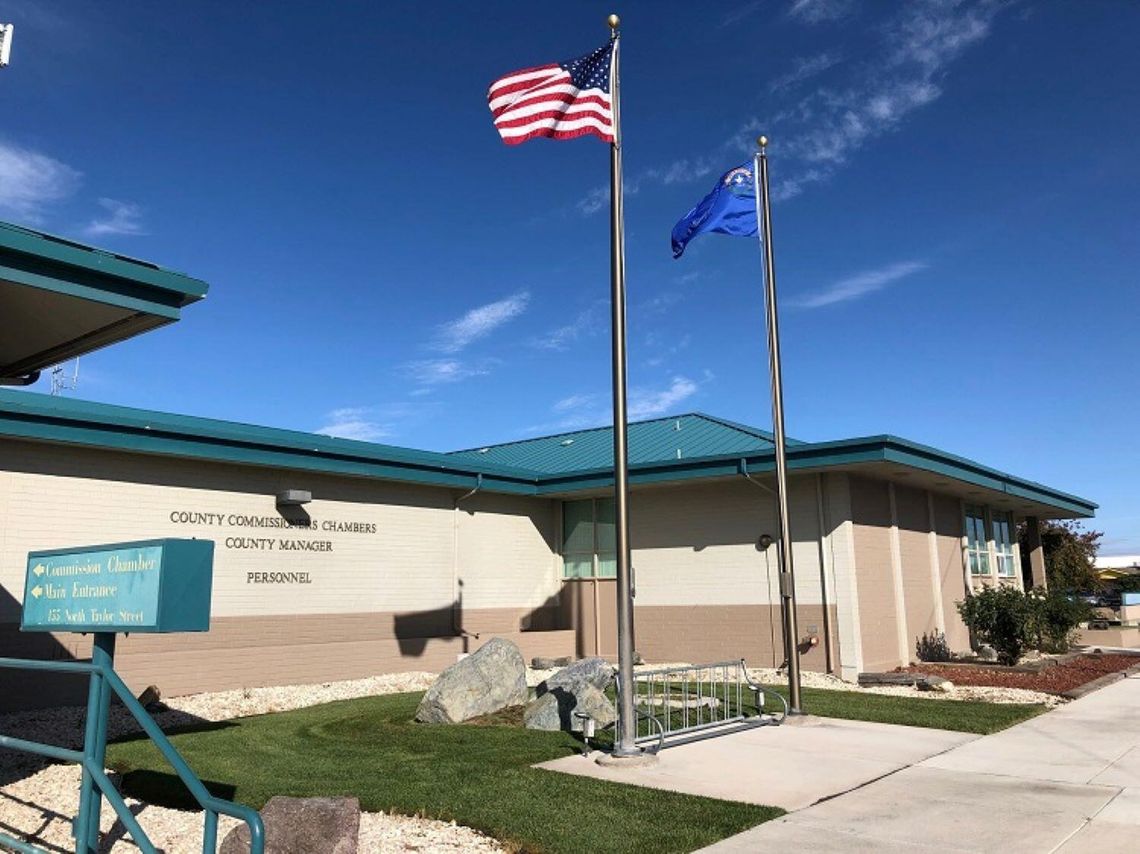
The Churchill County Board of County Commissioners convened Feb. 19–20 to begin a series of public budget hearings as the county starts its annual review of department budgets and funding for public services. Hearings are held for both the tentative budget, typically in February, and the final budget, usually in May. As part of the process, department heads walk commissioners and the public through what their offices do, how funds are used, and what financial considerations lie ahead.
The first presenter in the 2026–2027 budget hearings was Churchill County Social Services Director Shannon Ernst. Ernst acknowledged at the outset that the department’s budget structure can be difficult to follow. “We’re really not asking for anything, so you can take a deep breath,” she added.
“As you know, Social Services budget is quite complicated, based on the different revenue sources,” Ernst said, noting how they pass between different budget line items. “You’re looking at three different tax revenues and then the grants.”
While the accounting may be layered, Ernst explained, the department’s purpose is clear: providing a safety net for some of Churchill County’s most vulnerable residents through a mix of dedicated tax revenue and grant funding.
That includes limited rent and utility assistance to help residents stay housed, support for local mental health efforts, administration of indigent services required under state law, and support for jail medical costs. A significant portion of that responsibility involves meeting the county’s required Medicaid match when Medicaid services are involved, which Ernst said has now reached its statutory cap.
Under Nevada law, counties are required to contribute up to eight cents of every $100 of assessed property valuation toward the state’s Medicaid program. For years, Churchill County did not reach that maximum threshold. However, as Medicaid enrollment and overall program costs have increased statewide, the county’s required contribution has climbed to the full eight-cent cap.
Housing remains a central focus. Ernst said the New Pass House, a day center for transition housing that is currently under renovation, is expected to open in July. The project is designed to expand local housing support and services. However, recent restructuring of the U.S. Department of Housing and Urban Development programs has created uncertainty. “We submitted three applications to them to support the New Pass House and Day Center,” Ernst said. “Due to federal take-back… those projects no longer qualify.”
The department is now preparing five applications to the Nevada Housing Division to secure funding. Ernst noted that opioid settlement dollars and marijuana tax revenue are also used to help offset some housing-related costs.
Social Services also administers court-ordered guardianship cases under Nevada law and has seen an uptick in qualifying investigations. “I’ll be honest, we have received an additional four investigation orders that were qualified in the last three weeks,” Ernst said.
In addition, the county is required to contribute to Child Protective Services investigations, a mandated expense that increases annually.
Throughout the presentation, Ernst stressed that the department does not rely on the county’s general fund. “We do not touch the general fund,” she said. “We have to make work what we have.”
Recent state reimbursement related to Medicaid reform totaled approximately $280,000, which must be applied to Medicaid match obligations but frees up an equivalent amount within the indigent services budget.
Commissioners asked about reductions in certain service categories, and Ernst said decisions were made to align spending with projected tax revenue and rising salary costs. “We have to readjust,” she said. “Our office knows we don’t get general funds. We have to go off our projections of what the tax revenues are going to bring in.”
The Social Services presentation outlined the bulk of the department’s responsibilities, which all operate largely through dedicated revenue streams and grants. Ernst went on to present for the Pennington Life Center, CART, and Central Nevada Health District, which will be covered in future stories. Other departments also presented, with budget hearings continuing into Friday, Feb. 20.










Comment
Comments