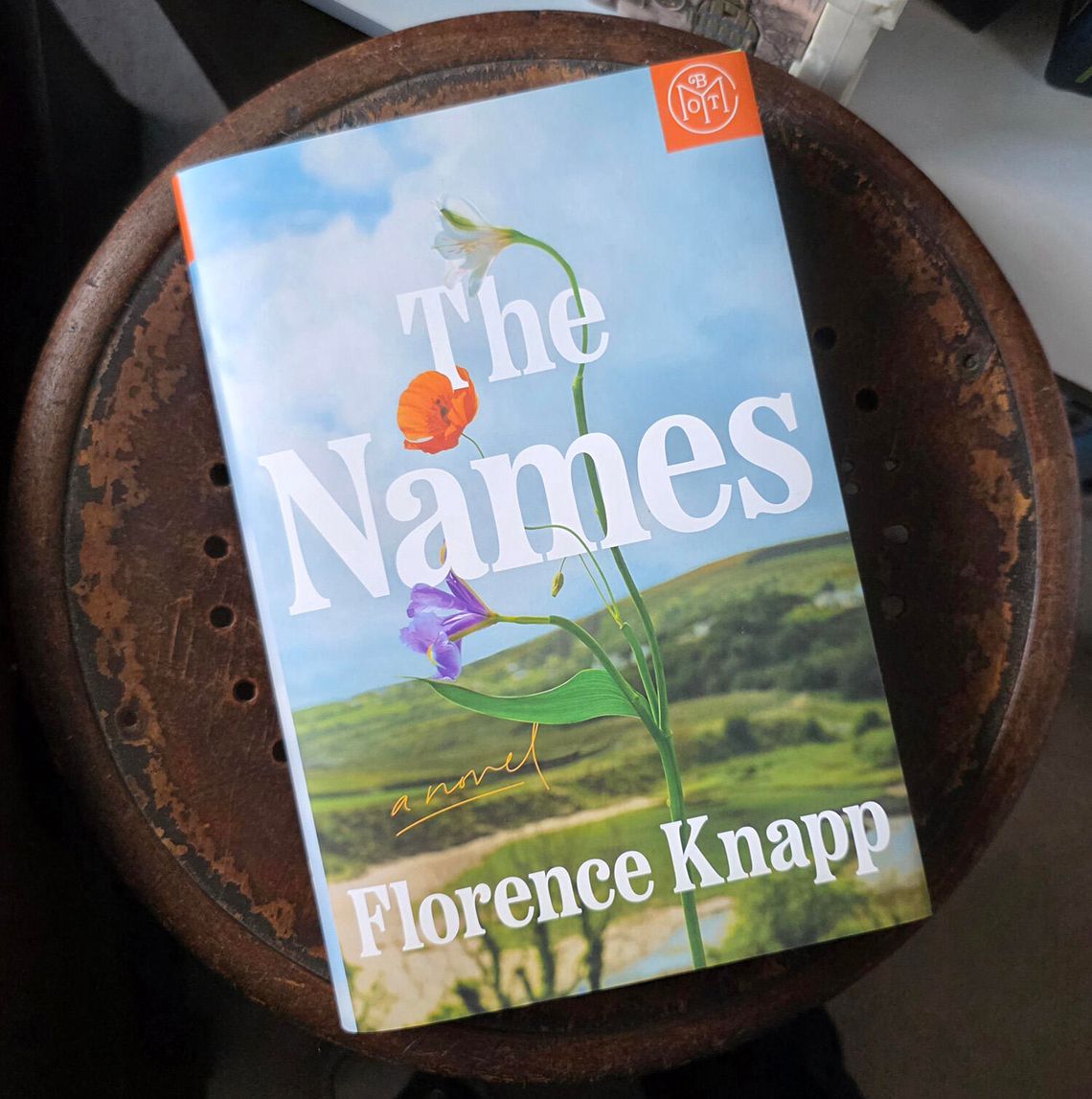
“The Names” by Florence Knapp
Anyone who has ever named a child knows the weight that a name carries. I know that when we named our daughters, we were so nervous – a name can shape who a person becomes. I have often wondered what my girls would be like if we had chosen differently, and this week I have a book that examines exactly that idea.
In 1987, a storm rages across England, but the real tempest is inside a registrar’s office where Cora Atkin stands at a life-altering crossroads. Trapped in a marriage to Gordon, a man whose public prestige as a doctor masks his private cruelty, Cora has a choice to make for her newborn son. Does she submit to her husband’s demands, follow her own heart, or listen to her daughter’s whimsy? Florence Knapp’s “The Names” takes this single moment and fractures it into three distinct, parallel lives: Gordon, Julian, and Bear.
This "sliding doors" narrative follows three versions of the same boy at seven-year intervals. In the Gordon timeline, Cora chooses the path of least resistance. This version of her son grows up in the suffocating shadow of his father’s toxic masculinity, becoming a man haunted by the need for approval and struggling with the cycles of addiction. It’s a poignant look at what happens when we let others dictate our identity before we even have a voice.
Then there is Julian, the name Cora chose for herself. This timeline feels like the "middle way," where Julian becomes a sensitive soul and a talented jewelry maker. He is perhaps the most grounded of the three, yet he still bears the psychological scars of a home life fractured by his parents' resentment.
Finally, we have Bear - the name suggested by his older sister, Maia. This choice represents Cora’s most radical act of rebellion. Bear grows up to be an adventurous archaeologist, embodying a rugged freedom and a sense of wonder that seems impossible in the other timelines.
The book is a masterful study of how domestic abuse ripples through a family, regardless of the path taken. While the boy’s career and personality shift based on his name, the trauma of his father’s presence is a constant "North Star" he must navigate. It sounds intense, but Knapp’s prose is so sharp and observational that it feels more like a deep, late-night chat with a smart friend than a heavy lecture. It’s a beautiful reminder that while our names might be a starting point, our lives are shaped by the quiet courage it takes to survive our own history.
I hope you like this week's pick – it is such fascinating food for thought! Don't forget to pop over to my Instagram, @allison.the.reader for more recommendations and to tell me what you thought of The Names!





Comment
Comments