
 Leanna Lehman
Part I: The Prostitution Connection
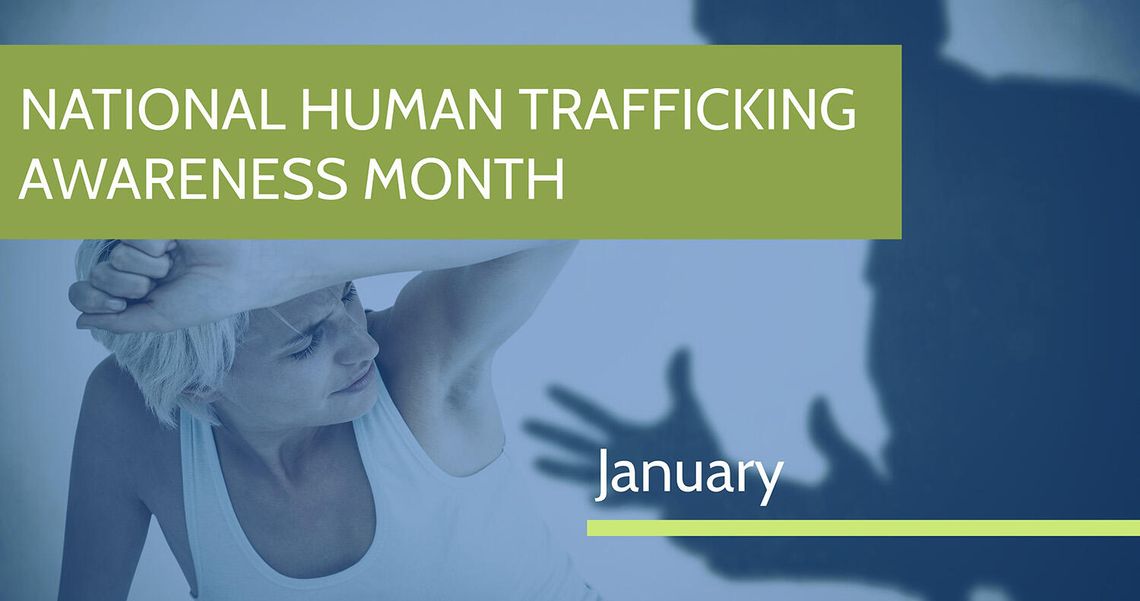
January is Human Trafficking Awareness Month, a time intended to focus attention on a crime that is often hidden in plain sight.
The Silver State, also known as the “Vice State,” is now reporting the highest per capita rates of sex trafficking. While states with larger populations report more total cases, more incidents based on population – or per 100,000 residents, occur in Nevada. It is also the only state with legalized prostitution, and those two facts are rarely discussed together.
Sex trafficking is largely believed to be women and children packed into shipping containers, stolen only to be sold abroad. Often misunderstood as a crime marked by kidnapping or outright violence, it most often occurs close to home and relies on coercion rather than force, with victims controlled through fear, drugs, money, circumstance, or emotional manipulation.
While sex trafficking does not differentiate between the legal and illegal sex trade, many experts believe that the high trafficking rates are due to Nevada’s legitimate sex industry. They argue that legal brothels increase the overall demand for commercial sex, leading many to falsely believe it is legal statewide, which then fuels the larger illegal market in metropolitan areas where prostitution is not permitted.
No one should be surprised that most prostitution in Nevada occurs illegally. This is where the assumption that legalized prostitution prevents sex trafficking begins to break down, and the laws of supply and demand prevail. Nevada’s illegal trade in the Las Vegas area alone is estimated to bring in about $5 billion annually – roughly 67 times more than legal sex sales.
For years, brothels have been promoted as reducing the risk of sexual assault and trafficking. They are declared as regulated, monitored, and safer than the underground sex trade. However, few people realized that most current or former brothel workers report having been trafficked at least one time in their lives, often more.
In 2019, 2020, and 2021, Nevada was named in the “Dirty Dozen,” a report compiled by the National Center on Sexual Exploitation (NCOSE), which identified 12 mainstream entities said to contribute to the normalization of sexual exploitation and trafficking. Nevada was the only state listed, specifically its prostitution industry, was alongside big names like Amazon, OnlyFans, Massage Envy, and Reddit.
Sex industry researcher Robin Smith recently wrote, “The decriminalization of sex sales leads to a substantial growth of sex trafficking through underage prostitution, ‘loverboy’ coercion, debt bondage, and other illicit sex trafficking activity.” Loverboy coercion, also known as “Romeo pimping,” is a common, calculated method where men pretend to be romantic partners who build trust, groom, and ultimately compel victims into sexual exploitation.
Some sex workers DO enter the trade voluntarily, while others are led by desperation and a belief that there is no other choice. On the frontlines of the human trafficking battle is Reno attorney, Dr. Jason Guinasso, who says, “When a person’s choices are shaped by poverty, trauma, addiction, or instability, the question is not simply whether they agreed, but whether they had a meaningful alternative.”
Within the legal sex trade, Nevada brothel workers are often required to live on the premises during their shifts, which can last one to three weeks, and they must be on hand to take customers. "You could go days without having a client, but the tab grew and grew, and it grew," says former Bunny Ranch publicist Deanne Holliday. “The girls were constantly trying to pay off their tab. That's why it was called debt bondage.”
Some facilities are fenced and locked, often described as a protective measure. Workers may have limited ability to leave and little control over which clients they see. Fees for housing, food, testing, licensing, and more are typically deducted from earnings, potentially creating financial dependency. Guinasso says that a transaction can appear voluntarily on paper, yet meet the legal definition of trafficking if the conditions compel someone against their will.
He noted one sex worker who earned $1,000 one day, gave the contracted half to the brothel, but also had to pay her tab. With $200 left in her pocket, she walked out of the brothel and gave her pimp all she had left. According to Guinasso, it is not uncommon for a sex worker to have a pimp who forces her into brothel work.
Coercion has many faces; it may even look like love. For many women, a pimp often begins as a romantic partner. Others will work under a pimp’s protection for safety reasons. However, the moment a sex worker is no longer a willing participant and is compelled to perform by her pimp, he becomes her trafficker. “If she tries to get away from the trafficker... he knows everything about her life and can do real harm,” says Guinasso. The line between pimp and trafficker is almost always crossed at some point, but the force or coercion is almost never reported.
Legalizing sex work does not automatically mean protection. Guinasso argues this: “When other states… are considering some form of legalization, they point to Nevada and say, ‘See, this is Nevada, and Nevada has been doing it for 50 years and it works.’ And our message is really no, actually. It’s not working.”






Comment
Comments