
The Churchill County School District (CCSD) is calling on local residents to help support an upcoming Christmas giving fair aimed at assisting homeless and foster children in the area. On December 13, more than one hundred students will be able to “shop” for donated clothes, gifts, and toiletries at no cost—a creative and timely event organized by the Students in Transition (S.I.T.) program. Community members are encouraged to donate clothing, toys, toiletries, diapers, baby items, and household essentials directly to Churchill County High School.
Margaret Scharmann, the S.I.T. Coordinator for CCSD, leads the district’s efforts under the McKinney-Vento Homeless Assistance Act. This federal program provides funding to help identify and support students experiencing homelessness. “My role is to identify and support students experiencing homelessness under the McKinney-Vento Act, remove barriers to their education, and ensure they have access to the resources they need to stay connected to school,” Scharmann told the Fallon Post.
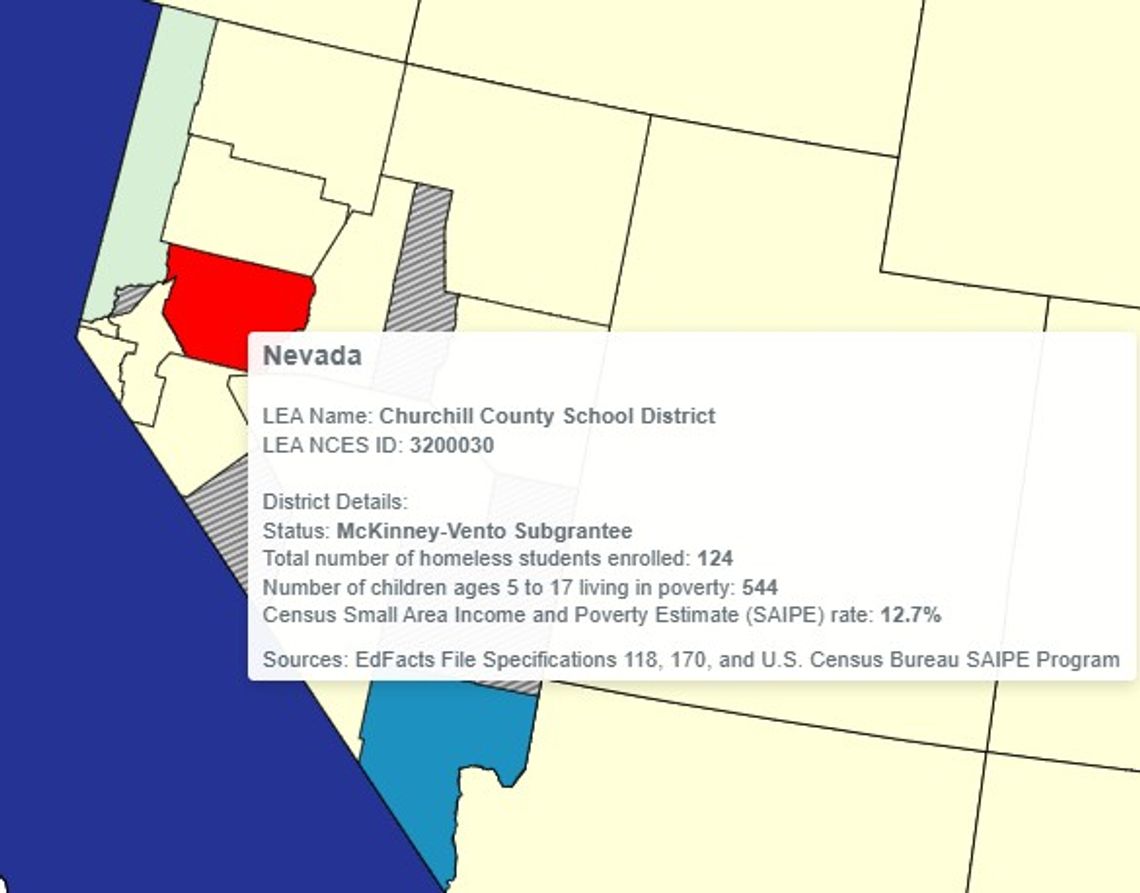
So far in the 2025–2026 school year, 120 students have been identified as experiencing homelessness in Churchill County, a figure that falls within the district's typical annual range of 125–150 McKinney-Vento-eligible students. Additionally, more than 500 students qualify as living in poverty based on federal indicators, such as free or reduced lunch eligibility and income thresholds. According to Department of Education statistics, CCSD currently serves 124 homeless students and a total of 544 students living below the federal poverty line.
To identify students in need, the district uses tools such as the Home Residence Questionnaire, which families complete at registration and during annual updates. Instability—such as doubling up with other households, staying in temporary housing, or lacking adequate shelter—triggers a review for McKinney-Vento eligibility. Referrals also come from teachers, counselors, and community organizations, many of whom are mandatory reporters required to alert administrators if a child appears to be in distress.
Once a student is identified, S.I.T. provides support, including school supplies, transportation assistance, hygiene items, necessities, educational advocacy, and protections to ensure school stability. While most of the 120 currently identified homeless students qualify under the “doubled-up” category—families staying with others due to loss of housing or financial hardship—the district also serves about eight foster youth, with numbers fluctuating throughout the year.
Scharmann notes that the McKinney-Vento Act uses a broader definition of homelessness than the Department of Housing and Urban Development (HUD). “HUD’s definition is much narrower,” she explained, focusing on those living in shelters or places not meant for human habitation and excluding most doubled-up families. “But McKinney-Vento uses a broader educational definition, including students staying in motels, campgrounds, inadequate housing, or bouncing between temporary living situations. Our goal is to remove the barriers that instability creates so students can stay in school, stay connected, and stay supported.”
Superintendent Derild Parsons added, “We are grateful for our programs that support our students and provide them with the resources they need to focus on their education.”









Comment
Comments