
 Leanna Lehman
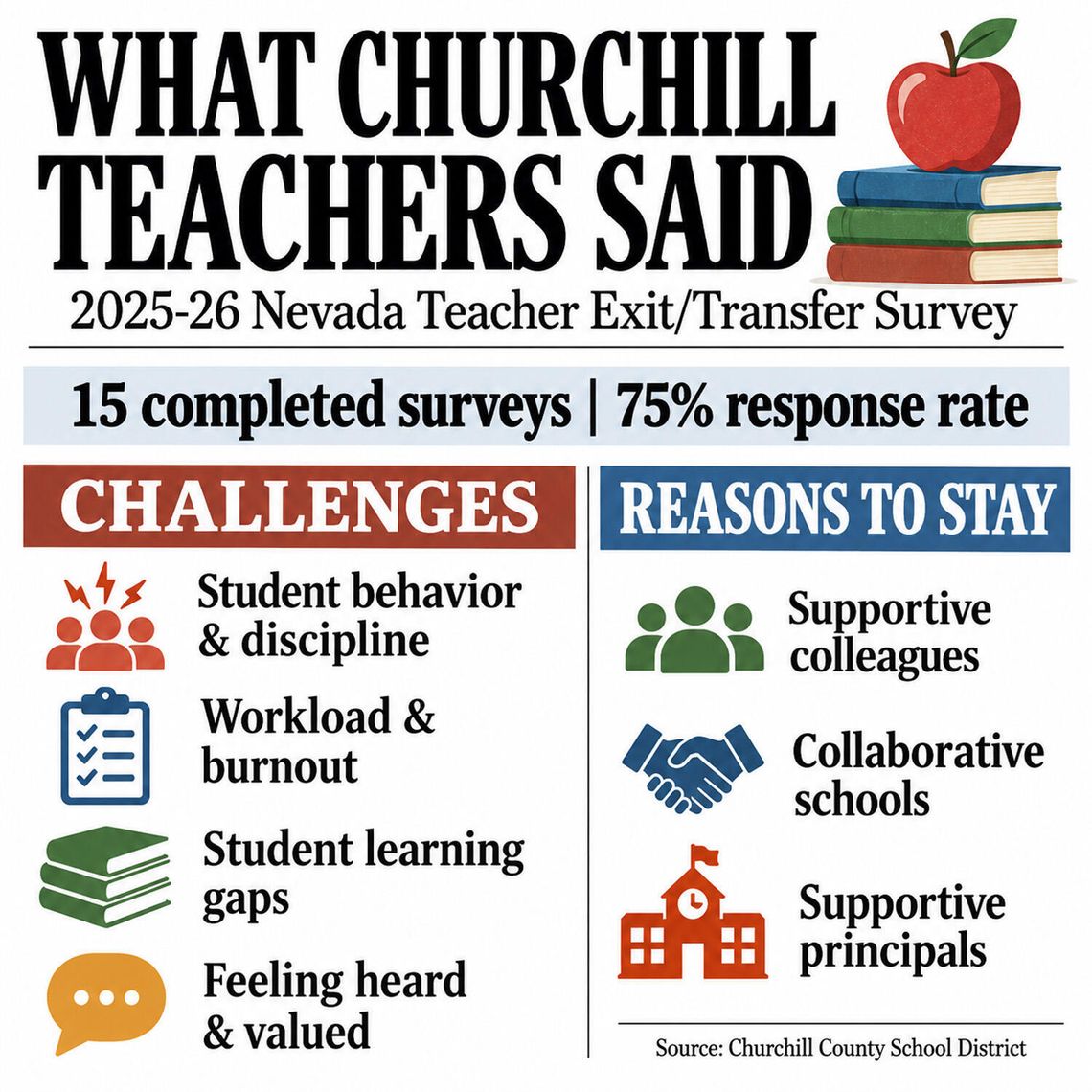
Student behavior and discipline, growing workloads, and burnout are among the concerns cited by Churchill County teachers leaving or transferring from their positions, according to results from the 2025-26 Nevada Teacher Exit/Transfer Survey presented to the Churchill County School District Board of Trustees Sept. 15.
The district received completed surveys from 15 teachers, representing a 75% response rate. A separate analysis of open-ended responses included 16 teachers, including responses from teachers who did not complete the full survey.
Student behavior, discipline, and classroom safety were the most frequently discussed concerns in the written responses. Teachers reported recurrent classroom disruptions, inconsistent or ineffective disciplinary consequences, limited behavioral supports and alternative placements for students with significant needs, and concerns that behavioral issues disrupted learning and classroom safety.
Several also pointed to limited parental support and options for addressing student discipline, saying teachers were left to handle behavior concerns themselves, taking time away from preparation and contributing to fatigue and burnout.
Trustee Joe McFadden said the findings stood out as he reviewed the survey data.
“For Churchill County, our number one reason teachers are leaving is for student discipline,” McFadden said. “And number two is workload expectations with a desire for more time for planning and prep preparing.”
McFadden said he was also struck by where teachers appeared to be going when they left.
“And it's interesting that teachers are not transferring to other districts or other positions. They're just straight up leaving the profession,” he said.
The district's analysis also identified workload and student readiness as common concerns. Teachers described additional meetings, administrative duties, documentation and reporting requirements, family engagement, and extracurricular expectations that contributed to workloads they felt could not reasonably be completed during contract hours.
Some also said students were entering their classrooms without the foundational skills needed for grade-level work, leaving teachers to address learning gaps while still being expected to teach grade-level standards.
Burnout was frequently mentioned, with some teachers connecting chronic stress, emotional exhaustion, and difficulty maintaining a work-life balance to decisions to retire early, pursue other careers, or leave the district.
But teachers also identified reasons to stay. Supportive relationships with colleagues and school-level administrators were reported as an important factor in job satisfaction and retention.
Teachers noted collaborative school communities, positive relationships with coworkers, and principals who were accessible, trusting, and supportive as reasons they would remain or consider returning.
Other concerns included district culture and communication, whether teachers felt heard and valued, compensation and benefits relative to workload, differences in recognition and treatment of newer and veteran employees, and opportunities for professional growth.
For McFadden, the findings raised a larger question about where the district should focus its retention efforts.
“As I went through this, I was thinking that we spend a lot of time and effort recruiting and keeping our compensation comparable and maybe we need to be looking harder at internal operations to help keep our teachers,” he said.
McFadden said comparing Churchill County's results with other districts also indicated there are retention issues the district needs to address.
Trustee Celestia Blakey said the survey answered questions she had raised last year and wanted the board to take the next step.
“I do think that the information is helpful and hopefully in the future we can maybe talk about what we're going to do to help fix this more alongside of what Trustee McFadden was saying of keeping our teachers here,” Blakey said.
The district's Human Resources Department said the survey results provide additional context for understanding the combination of working conditions, student behavior, workload, leadership, compensation, and other factors influencing teacher retention.




















Comment
Comments