
 Leanna Lehman
Churchill County Planning Commissioners recommended a zoning change Wednesday, Aug. 12, that could eventually allow Rivian to conduct destructive battery testing on remote property north of Fallon.
The application, filed by Mary Heapy of Arcadis Inc. for Rivian, seeks to change the zoning on 218.57 acres along U.S. Highway 95 North from RR‑20 Rural Resource to I‑3 Heavy Industrial, approximately seven miles south of Trinity Junction.
Rivian identified destructive battery testing as the intended use, but commissioners were not considering approval of a testing facility Wednesday. The zoning change would allow Rivian to pursue the project through the county’s permitting process. Site‑specific issues involving public health and safety, infrastructure, neighboring properties, and other impacts would be addressed as the project moves forward.
Destructive battery testing, also known as battery abuse testing, generally involves subjecting batteries to extreme conditions to determine how they fail and how well safety systems perform. Depending on the test, batteries may be crushed, punctured, short‑circuited, overcharged, overheated, or subjected to fire or thermal runaway. Details of Rivian’s proposed testing were not presented during the zoning hearing.
Senior Planner Dan Cahalane said the property is within an area identified for industrial development in the county’s master plan. He described the location as remote, with a gravel mine approximately two miles away and the closest residentially zoned property about 17 miles south.
The I‑3 designation allows heavier industrial uses intended to be located away from residential and other nonindustrial areas. Destructive battery testing is among certain uses requiring a half‑mile setback from the highway.
Planning Commissioner Jeff Goings said the location reflects previous discussions about moving heavy industrial development farther from populated areas. “This is exactly what the community has been asking for,” Goings said. “Push it north, get it out of town.”
Public Works, Planning and Building Director Randy Hines said detailed reports associated with Rivian’s proposed use are not required at the zone‑change stage.
During public comment, Michelle Anderson questioned what destructive battery testing would involve and how the county would respond to an emergency. “I’m also concerned about what battery testing actually means,” Anderson said.
She asked about the types and quantities of batteries that could be tested, fire suppression and environmental containment, and whether local emergency services have adequate staffing, training, equipment, and resources to respond to a battery fire or thermal runaway.
“This zoning decision outlives Rivian,” Anderson said, noting that I‑3 zoning would remain with the property and could allow other heavy industrial uses in the future.
Other Business
Commissioners recommended approval of the Phase 1 final subdivision map for Sand Creek No. 2, south of Casey Road, which includes 25 residential lots.
A special use permit was approved for Dana and Barbara Hutchison to operate a home‑based sewing, tailoring, and craft business at 1300 Lattin Road.
Commissioners also approved a parcel map for JDLN Enterprises LLC at 9900 Carson Highway, dividing the 7.48‑acre industrial property into 4.15‑ and 3.33‑acre parcels.
Public Access to Meeting Information
During opening public comment, Anderson asked that notices, workshops, meetings, agendas, and other opportunities for public participation be shared through additional channels, including the county’s Facebook page.
“Right now, public notices are published in the newspaper as required, but the reality is a lot of people simply don’t read the newspaper anymore,” Anderson said. “That means residents may never see notices about zoning changes, parcel maps, development proposals, workshops, or meetings until something is already pretty far along in the process.”
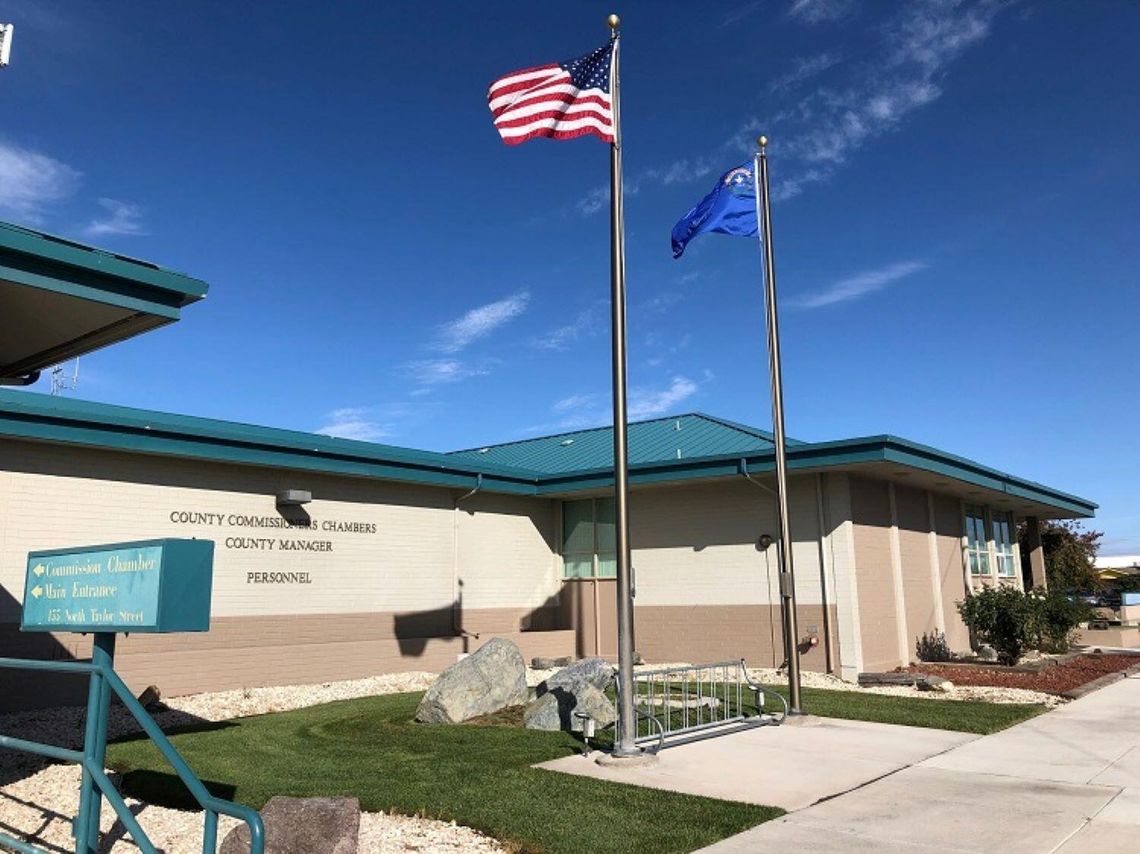
Administrative Assistant Diane Moyle said zone changes, ordinance amendments, and road abandonments are among the Planning Commission items published as legal notices in the newspaper. Landowners are notified as required, information is posted on the county website and outside commission chambers, and agendas are also posted through the state’s public meeting system.
Chief Deputy District Attorney Lane Mills confirmed that the county meets statutory posting requirements.
Planning Commissioner Joe Frey requested further discussion at a future meeting about posting meeting information through additional channels like Facebook. “I do think that’s where most people get their news,” Frey said. He suggested social media could simply alert residents to upcoming meetings and direct them to the county website.
“It would be nice just to at least get it in front of their faces a little bit more,” Frey said.


















Comment
Comments