
 Staff Report
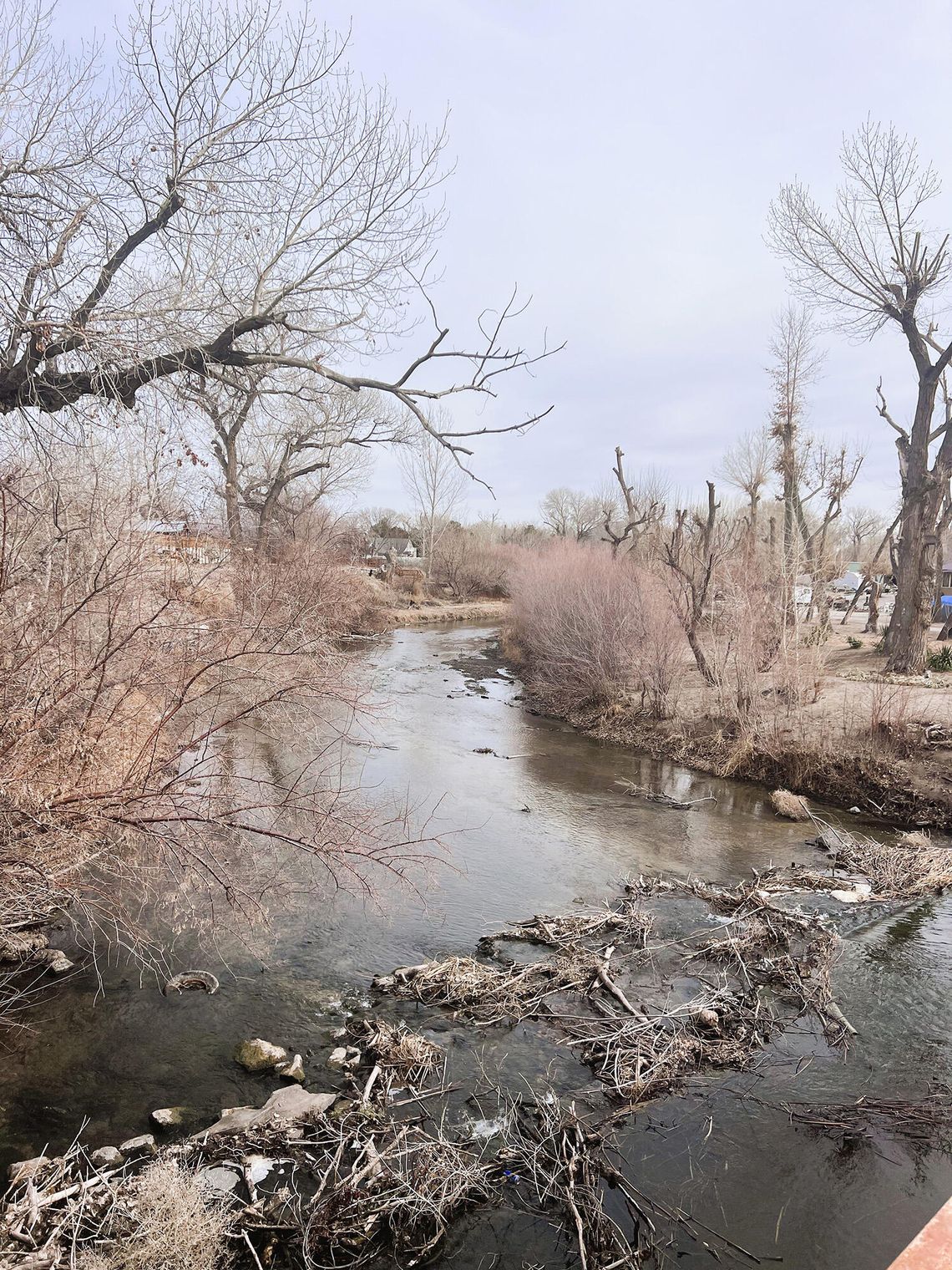
The Truckee-Carson Irrigation District Board of Directors covered a wide range of operational and water-management topics during its regular May 5 meeting, with staff reporting generally positive water-supply conditions heading into the heart of irrigation season.
Watermaster Kelly Herwick reported the Truckee River at Vista was flowing at approximately 1,100 cubic feet per second, while Lahontan Reservoir storage stood at roughly 230,932 acre-feet, with inflows continuing to outpace releases. Forecasts for Carson River runoff improved slightly from the previous month, with projections ranging from 47,000 to 63,000 acre-feet depending on runoff scenarios.
Herwick said current modeling indicates Lahontan Reservoir is expected to finish the season with at least 50,000 acre-feet remaining in storage, a more favorable outlook than many irrigators feared earlier this year.
TCID is also preparing to begin transporting credit-storage water earlier than usual because of runoff timing and weather conditions. Staff noted some water-delivery delays, and possible cutbacks may occur as flows are adjusted to prevent canals from becoming overloaded.
Hydroelectric Operations Manager Mark Solinski reported New Lahontan was the only generating plant currently operating, producing approximately 3,200 kilowatts. Solinski also discussed recent earthquake response efforts, noting staff had completed four separate inspections at Lahontan Dam following regional seismic activity and found no issues.
“We’re getting good at it,” Solinski joked during the discussion, referencing the frequency of recent earthquake checks in recent weeks.
General Manager Ben Shawcroft reported on several ongoing projects, including capital-improvement grant opportunities, solar-lease discussions, and the district’s evolving online water-ordering system.
He said TCID recently met with state officials regarding infrastructure grant-funding programs that could help support future district projects through 80/20 matching grants. He also said the district’s new Waterwise online portal is nearing operational status after delays caused by compatibility issues with existing software systems.
The meeting’s longest and most detailed discussion centered on TCID’s water-measurement program and frustrations from some water users regarding how irrigation deliveries and losses are calculated.
At the board’s request, staff presented an overview of the district’s measurement process, including the equipment used to verify flows, the analysis of meter data, and the handling of delivery adjustments.
Water Measurement Technician Rachel Enox explained that the district now uses newer ultrasonic flow-measurement devices that electronically calculate water velocity and depth, replacing older propeller-style equipment that had been used for decades.
Staff said the district is working to verify and remeasure more delivery systems because newer technology is producing more accurate data than older methods.
“We’re trying to measure every meter to make sure they’re accurate,” Enox told the board during the presentation.
The discussion quickly shifted into a broader debate over delivery losses in long dirt ditches and where water should legally be measured under longstanding water decrees governing the Newlands Project.
Several irrigators, including longtime farmer Norm Frey, argued that water users are being unfairly charged for losses that occur between district meters and the fields receiving irrigation water.
Frey said some deliveries travel more than a mile through a private dirt ditch before reaching crops and argued that current practices are inconsistent with the historic Orr Ditch Decree and Alpine Decree that govern project operations.
“The guiding document for all of this is the Orr Ditch Decree,” Frey said during public discussion. “It must be delivered to the land.”
He argued that changes over the years, including federal operating rules, farm unit policies, and measurement changes, have gradually shifted responsibility for conveyance losses onto irrigators without adequately accounting for the actual water reaching fields.
TCID staff acknowledged the issue is complex and said the district has been working to improve its adjustment process while updating older loss calculations.
Staff explained that official loss factors are typically established using multiple measurements taken under spring, summer, and fall conditions to account for seasonal changes in vegetation, sediment, and flow.
According to TCID, more than 80 percent of adjustment requests filed last year were approved after staff review. Officials said operational issues and administrative problems accounted for a large share of adjustment requests.
Board members also discussed the challenges of managing more than 1,600 takeouts and roughly 10,000 annual water deliveries across the Newlands Project.
In other business, the board approved routine financial matters and awarded the district’s annual concrete-supply bid to Cheek Construction after determining it submitted the lowest compliant bid. The board also approved more than $526,000 in transfers to cover district expenses.

















Comment
Comments