
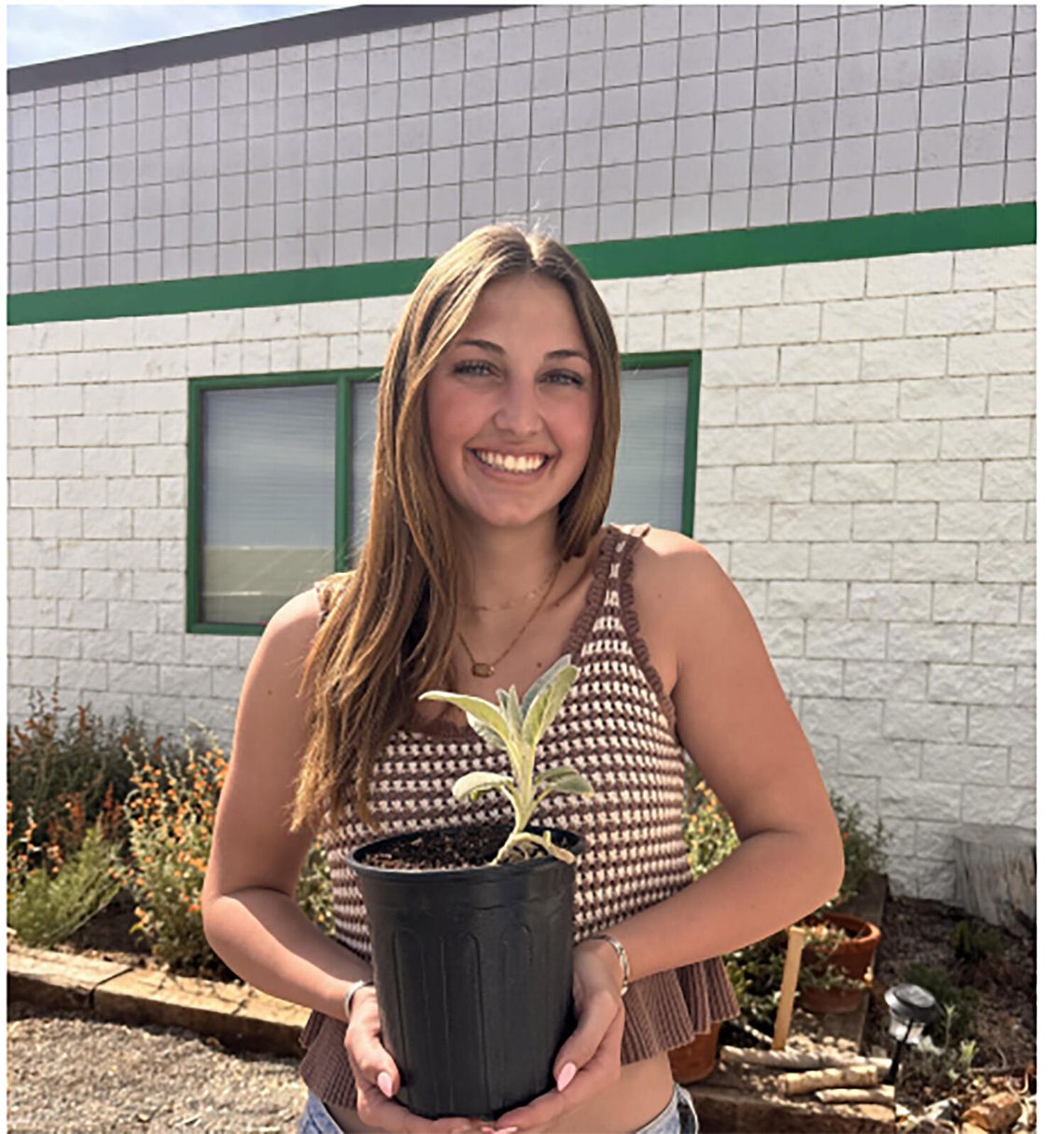
My name is Lauren Goings, and the plant I would like to introduce you to is Stachys byzantina, most commonly known as lamb’s ear. It flourishes in our beautiful, sunny state and is one of my favorites. The plant definitely lives up to its name — it’s soft to the touch, and the leaves are covered in a tiny white fuzz.
Lamb’s ear is very easy to grow from seed, is considered low-maintenance once established, and makes a great addition to your garden here in Fallon as an attractive perennial ground cover. Even better, it’s not just a pretty plant. Lamb’s ear is also a tough, drought-tolerant species. In our area, watering twice a week really helps the plant get established. It also helps to prune the dead leaves every now and then. Not only does that make the plant look more pleasing to the eye, but it also encourages more growth when you remove the dead leaves and spent flowers.
Did you know that lamb’s ear’s soft, absorbent leaves were once used as early bandages? Soldiers used the leaves as field dressings to help stop bleeding. The tiny hairs that protect the plant from pests, sun, and dehydration also protect us. The leaves and flowers are edible, although the fuzz might be off-putting for some. It’s nice to know, however, that you could safely include it in a children’s garden. I’ve read that in Brazil, the leaves are fried as a snack called “peixinho da horta.”
Lamb’s ear also produces small, purple, pinkish flower spikes that attract many pollinators, including honey bees, bumblebees, and specifically wool carder bees. Wool carders — also known as leaf cutters, carders, or mason bees — line their nests with the plant’s fuzz.
I have always liked this plant and was glad when Mrs. Sammons dug up a large hunk from her garden and brought it to school for us to divide and transplant. As we divided it, we focused on preserving the shallow fibrous roots. Our school is redoing the front landscaping, and my plant systems class is designing it. Lamb’s ear will be part of the landscape along the pollinator area border. You can also purchase lamb’s ear that we grew for the Lahontan Conservation sale.
I am a junior in high school, and this is my second year taking this class. It has given me many opportunities in plant‑related careers and new information every day. I enjoy working in the greenhouse; it is a calming getaway from the rigors of schoolwork. Although we are forced to take handwritten notes at times,* I recommend this class to anyone interested in a plant-focused job or even to someone who just wants to feel a little more connected to nature.
We plant and study unique species such as lamb’s ear, plants native to Nevada, and even plants that could never grow outside a greenhouse here, like lemon trees.
*Mrs. Sammons chuckling here".











Comment
Comments