
 Leanna Lehman
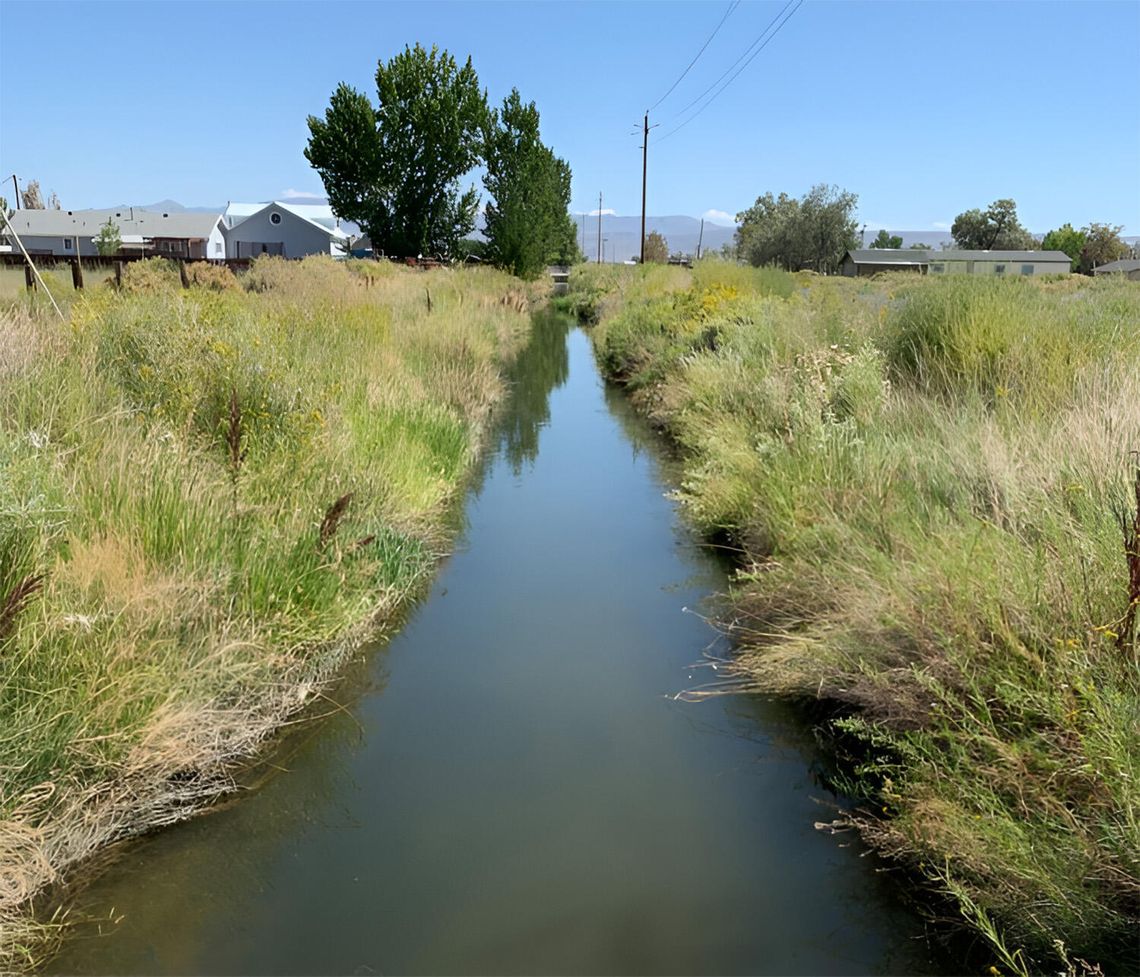
The Truckee-Carson Irrigation District Board of Directors met Feb. 3 in Fallon for its regular monthly meeting to discuss operations, finances, and early water supply projections for the upcoming season.
District Water Master Kelly Herwick told the board that early forecasts indicate allocations to project water users could range from about 68% to 70%, with the potential to reach as high as 91% depending on spring weather.
During an update from Fallon Paiute-Shoshone Tribe representative Anthony Berreman on water-related activities on the reservation, Board Vice President Davy Stix raised questions about how the longstanding memorandum of agreement (MOA) between TCID and the tribe applies in lower-water years and how it affects different classifications of tribal land.
In a follow-up interview with TCID General Manager Ben Shawcroft, he clarified that the 2020 agreement Stix referred to is the MOA Regarding Delivery and Use of Newlands Project Water on the Fallon Indian Reservation.
Public Law 101-618, officially known as Title I of the Fallon Paiute Shoshone Indian Water Rights Settlement Act, passed by Congress in 1990, established the tribe’s water rights settlement and authorized a $43 million fund for land purchase, water rights, irrigation system improvements, and economic development. The law limits Newlands Project deliveries to the reservation, and places acquired land and water rights into federal trust. Operational details, including allocation thresholds, are governed by later agreements such as the memorandum discussed at the meeting.
The Newlands Project is a federal irrigation system in western Nevada, authorized in 1902 as part of the nation’s first Reclamation projects. It diverts water from the Truckee and Carson rivers through a network of reservoirs, canals, and drains to supply farms, wetlands, and tribal lands in the Lahontan Valley.
Returning to the operational terms of that agreement, Herwick explained that the MOA provides the tribe with a 100% allocation unless overall water availability falls below 56%. Early projections for the upcoming irrigation season, he said, place the tribe at the 100% allocation level because water supply is not expected to drop below that threshold.
Stix then asked whether that 100% provision applies to tribal lands located outside reservation boundaries.
Wyatt Golding, representing the tribe via Zoom, said the tribe has generally treated water on reservation and trust lands as a single unit. “I think the way we’ve approached it is that all the water within the reservation boundary and the trust lands is treated as kind of like one big farm unit, and we can move water around,” Golding said. He added that it was their understanding that the agreement applied “irrespective of whether it’s tribal members using it or the tribe owning it.”
Board members then discussed whether the agreement distinguishes between reservation boundaries and trust lands located outside those boundaries. Golding said that, to his understanding, the agreement specifies water use within reservation boundaries, and that changes in use outside the reservation typically require approval from the state engineer.
“That wasn’t the question, though,” Stix replied. “The question was the 100% rule. Does it apply to land outside of the tribal boundaries?”
Golding said he would follow up with the board to confirm the details. “These are careful questions, and I want to be really clear about what we’re talking about when we’re talking about boundaries,” he said. “There’s the reservation boundary, and there are also trust lands which are sometimes considered part of the reservation … I just want to be very careful because I know this can be a contentious issue.”
Stix later asked how the agreement applies to individual tribal water right owners within the reservation. Herwick confirmed that individual users are treated like other water users in the district, but still fall under the memorandum. “They fall under the rule because they’ve taken the haircut twice in this project,” he said.
“Okay, but they also get a free ride with the state engineer, then on transfer,” Stix responded. To which Herwick stated, “That’s a different question.”
“I think ‘free ride’ is inappropriate,” Golding interjected, as Herwick pointed out that again, “That’s a different question. There is no free ride. They pay for it just like anybody else.”
Further discussion ensued around stacking water. The topic turned to the moving of water from one location to another as needed, as is routinely done on large farm units. Shawcroft clarified that the tribe has some flexibility under the agreement to begin or extend its irrigation season differently from other users, but they must still use all their water within the water year, as all water users do.
Shawcroft clarified that the memorandum includes a list of the water rights it applies to and said TCID would verify whether specific rights fall under the rule. He also later noted that TCID has a very good working relationship with the tribe and that the district works to ensure everything runs smoothly on the reservation, as it does with all water users in the Newlands Project.
The discussion ended without a final determination on how the 100% provision applies to lands outside reservation boundaries. Golding said he would provide clarification after reviewing the agreement.










Comment
Comments