 Michon Mackedon
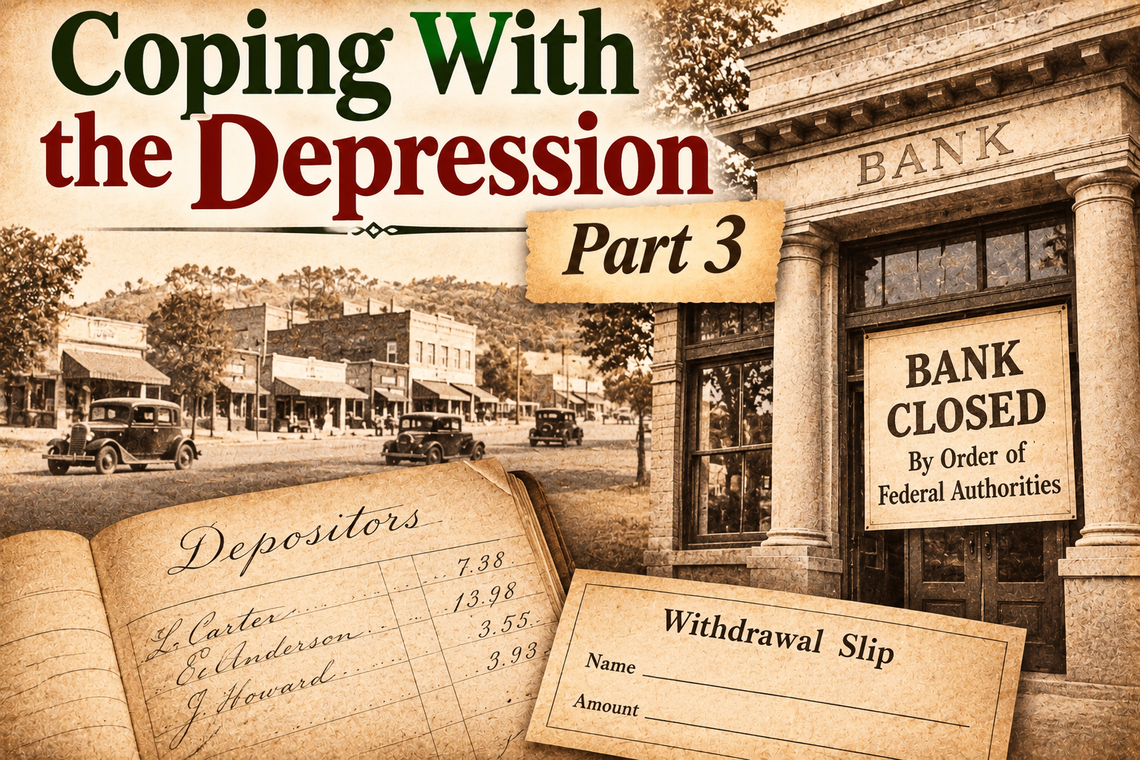
A view of Fallon’s economic state during the Great Depression is incomplete without delving into the role played by George Wingfield during both the early years of plenty and the later years of ruin.
George Wingfield (1879-1959) was one of the most powerful figures in Nevada during the first third of the 20th century. He is remembered as a financier, a rancher, a banker, a speculator, even, by some, as a scoundrel; but in anyone’s eyes, he was a force to be reckoned with. His financial empire was forged in Goldfield and Reno, and by 1917 (maybe earlier), he had made loans to Fallon farmers and ranchers, including sugar beet growers. He put down a few local roots by establishing a creamery here and building a home at the end of Serpa Place — a home and yard eventually owned and artistically curated by the late Valeria Serpa. The “Churchill County Eagle,” May 12, 1917, called him a “benefactor of Churchill County.”
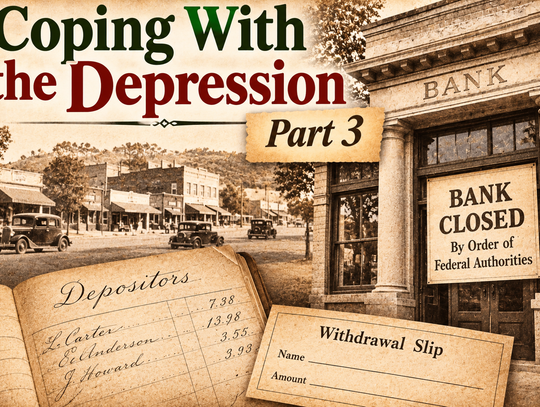
In August 1921, Wingfield purchased the Churchill County Bank and consolidated it with the Bank of Fallon. He accepted livestock and crops as collateral for his loans, a controversial practice that increased the scope of the local fiasco when Wingfield’s entire banking chain collapsed and closed for a mandatory “banking holiday” on Nov. 1, 1932. The banks were formally closed on Dec. 14, 1932, leaving a trail of shock and despair.
The Wingfield banks had received millions in emergency assistance from the federal Reconstruction Finance Corporation, but it wasn’t enough. Wingfield was accused of embezzling $500,000 from his banks, but he eventually replaced the sum from his own pockets. He declared bankruptcy when the banks closed.
In Fallon, a group of 230 depositors fought back against devastating losses. They met together on April 24, 1933, to discuss ways to recover their money. Rejecting Wingfield’s proposed banking reorganization, they created an independent liquidation corporation. According to an article published in “In Focus,” Volume 4, written by Ethelyn Coverston, her father, George, owner of the Fallon Garage, led the group.
“When the depression set in and the banks were forced to close, George became chairman of the Depositors’ Committee to liquidate the assets of the Churchill County Bank, one of the Wingfield chain. Most of their assets were in the form of chattels with, for example, cattle selling at $25 a head.” The Committee, according to the article, succeeded in taking over the assets and “repaying a higher percentage of deposits than any other bank.”
In an oral history held by the Churchill County Museum, Carl Dodge remembered the effect of the Wingfield bank closures on his family’s finances:
“One of the things that saved them at that time is they were doing some work over in Utah . . . some highway work. And they were doing business with a Utah bank. And during the Depression years, the Wingfield chain in Nevada collapsed. Wingfield had thirteen banks, one in Fallon, and over the years he had helped finance my dad and uncle. They had a very close, personal relationship. Wingfield had a property down here, and he used to come down, and they'd see each other a lot. He had a little agricultural property here. So when the Wingfield chain folded up, nobody could get any money—the money was all tied up, what there was. Fortunately, my dad and uncle had money over in this bank in Utah through the construction business, and they had work going on over there that kept some money flowing and kept them afloat in a very difficult time when you couldn't lay your hands on a dollar anywhere. And so in a sense, that's the only thing that saved them.”
As perhaps a variation on an old theme, while the penniless people suffered, George Wingfield found more pennies and recovered his fortune after partnering with Nobel Getchell to develop the Getchell Gold Mine near Golconda, Nevada. He died a very wealthy man.
Please send your stories and ideas for stories to [email protected]. I’d like to tell your story.




Comment
Comments