
 Michon Mackedon
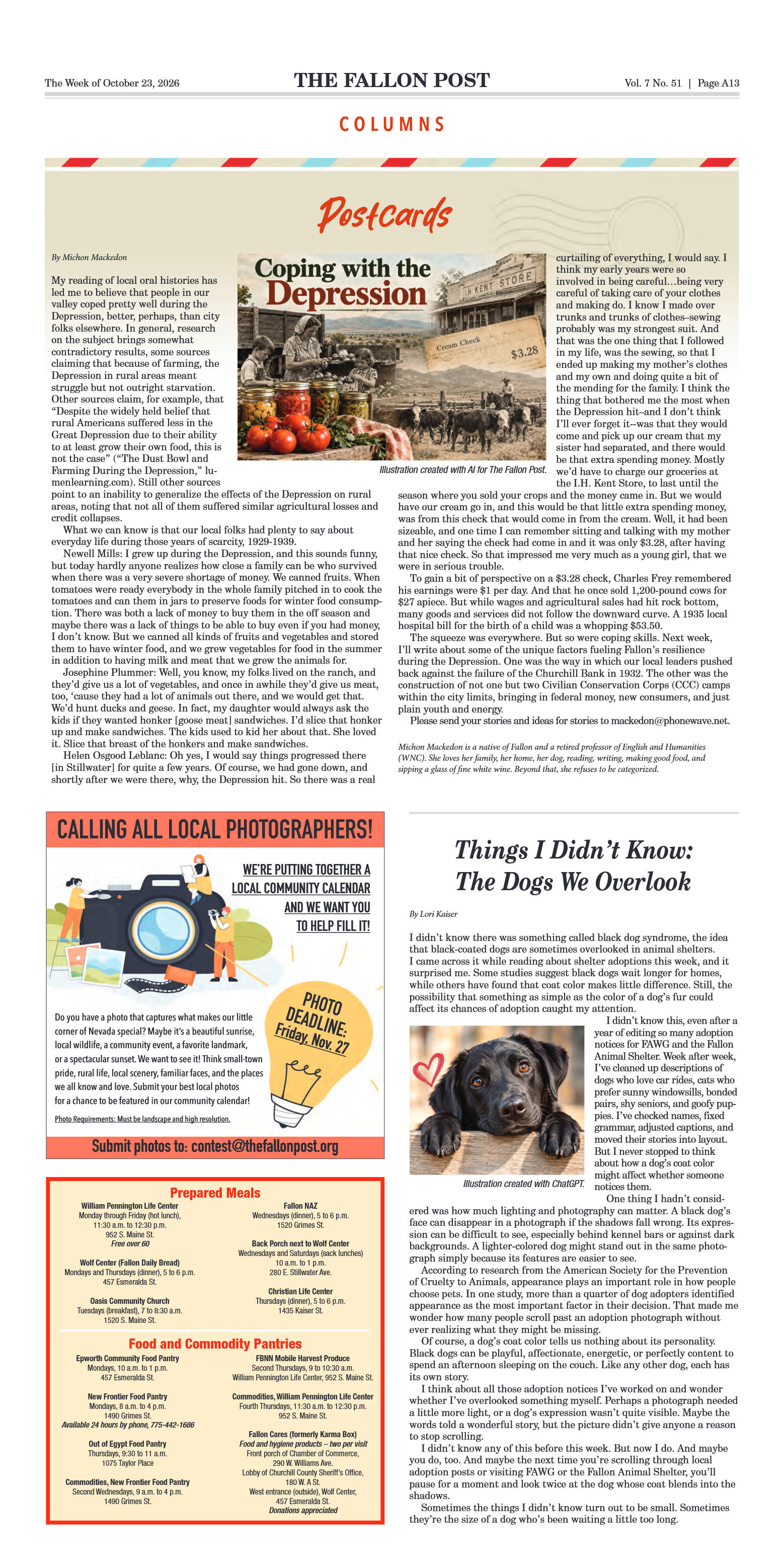
My reading of local oral histories has led me to believe that people in our valley coped pretty well during the Depression, better, perhaps, than city folks elsewhere. In general, research on the subject brings somewhat contradictory results, some sources claiming that because of farming, the Depression in rural areas meant struggle but not outright starvation. Other sources claim, for example, that “Despite the widely held belief that rural Americans suffered less in the Great Depression due to their ability to at least grow their own food, this is not the case” (“The Dust Bowl and Farming During the Depression,” lumenlearning.com). Still other sources point to an inability to generalize the effects of the Depression on rural areas, noting that not all of them suffered similar agricultural losses and credit collapses.
What we can know is that our local folks had plenty to say about everyday life during those years of scarcity, 1929-1939.
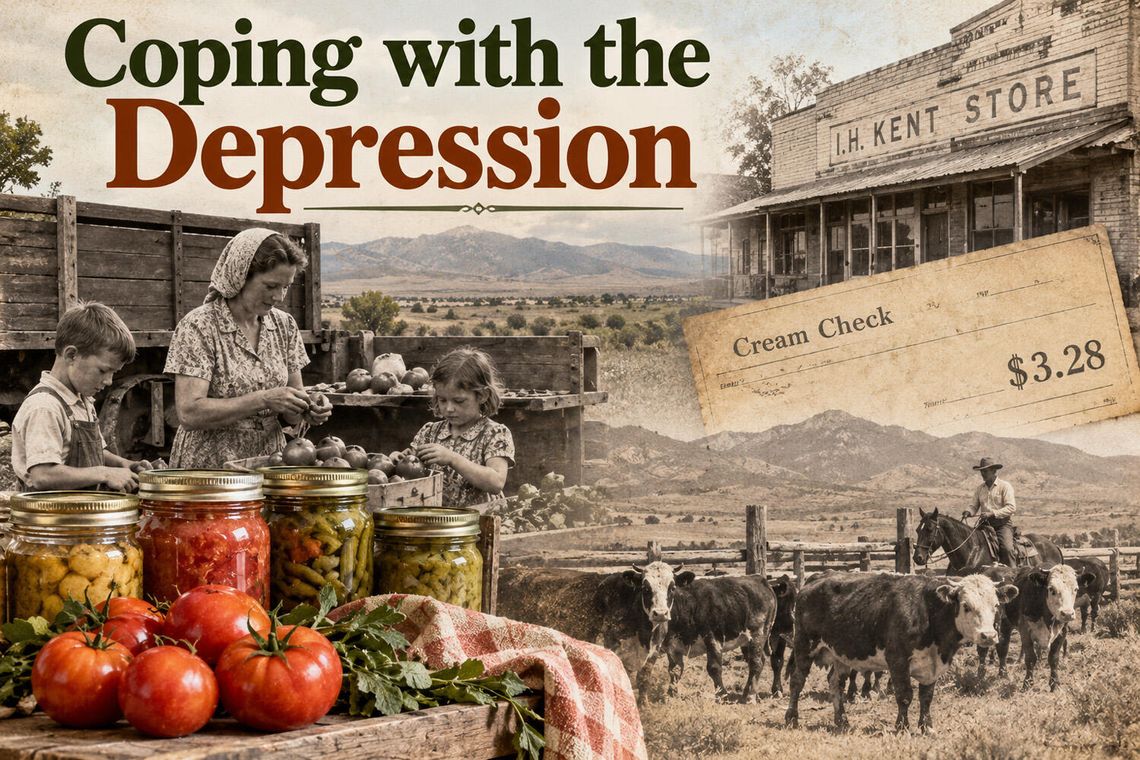
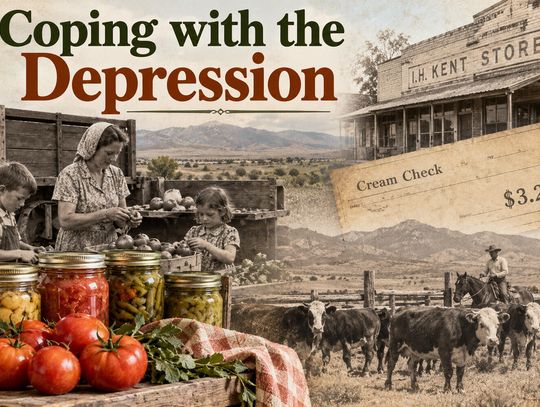
Newell Mills: I grew up during the Depression, and this sounds funny, but today hardly anyone realizes how close a family can be who survived when there was a very severe shortage of money. We canned fruits. When tomatoes were ready everybody in the whole family pitched in to cook the tomatoes and can them in jars to preserve foods for winter food consumption. There was both a lack of money to buy them in the off season and maybe there was a lack of things to be able to buy even if you had money, I don't know. But we canned all kinds of fruits and vegetables and stored them to have winter food, and we grew vegetables for food in the summer in addition to having milk and meat that we grew the animals for.
Josephine Plummer: Well, you know, my folks lived on the ranch, and they'd give us a lot of vegetables, and once in awhile they'd give us meat, too, 'cause they had a lot of animals out there, and we would get that. We'd hunt ducks and geese. In fact, my daughter would always ask the kids if they wanted honker [goose meat] sandwiches. I'd slice that honker up and make sandwiches. The kids used to kid her about that. She loved it. Slice that breast of the honkers and make sandwiches.
Helen Osgood Leblanc: Oh yes, I would say things progressed there [in Stillwater] for quite a few years. Of course, we had gone down, and shortly after we were there, why, the Depression hit. So there was a real curtailing of everything, I would say. I think my early years were so involved in being careful…being very careful of taking care of your clothes and making do. I know I made over trunks and trunks of clothes--sewing probably was my strongest suit. And that was the one thing that I followed in my life, was the sewing, so that I ended up making my mother's clothes and my own and doing quite a bit of the mending for the family. I think the thing that bothered me the most when the Depression hit--and I don't think I'll ever forget it--was that they would come and pick up our cream that my sister had separated, and there would be that extra spending money. Mostly we'd have to charge our groceries at the I.H. Kent Store, to last until the season where you sold your crops and the money came in. But we would have our cream go in, and this would be that little extra spending money, was from this check that would come in from the cream. Well, it had been sizeable, and one time I can remember sitting and talking with my mother and her saying the check had come in and it was only $3.28, after having that nice check. So that impressed me very much as a young girl, that we were in serious trouble.
To gain a bit of perspective on a $3.28 check, Charles Frey remembered his earnings were $1 per day. And that he once sold 1,200-pound cows for $27 apiece. But while wages and agricultural sales had hit rock bottom, many goods and services did not follow the downward curve. A 1935 local hospital bill for the birth of a child was a whopping $53.50.
The squeeze was everywhere. But so were coping skills. Next week, I’ll write about some of the unique factors fueling Fallon’s resilience during the Depression. One was the way in which our local leaders pushed back against the failure of the Churchill Bank in 1932. The other was the construction of not one but two Civilian Conservation Corps (CCC) camps within the city limits, bringing in federal money, new consumers, and just plain youth and energy.
Please send your stories and ideas for stories to [email protected].






Comment
Comments